PDF · English
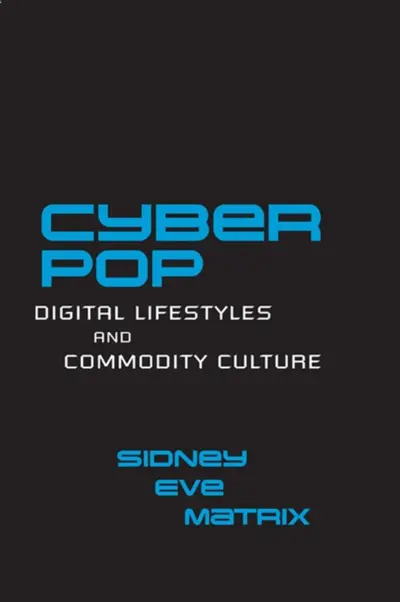
Cyberpop
Digital Lifestyles and Commodity Culture
Price and availability
$74.99
Available in: Andorra, Austria, Australia, Belgium, Bulgaria, Canada, Switzerland, Cyprus, Czechia, Germany, Denmark, Estonia, Spain, Finland, France, United Kingdom, Guernsey, Greece, Croatia, Hungary, Ireland, Isle of Man, Iceland, Italy, Jersey, Japan, Liechtenstein, Lithuania, Luxembourg, Latvia, Monaco, Malta, Netherlands, Norway, Poland, Portugal, Romania, Sweden, Slovenia, Slovakia, San Marino, United States, Vatican City, South Africa
Stores: US, UK, Canada, EU, Australia.
Sign in to buyThe price is re-checked by the server before payment.
For personal use under the eBook licence.
- Format
- DRM
- Not stated by the publisher
- Language
- English
- Publisher
- Taylor & Francis
- Published
- 13 May 2013
- ISBN
- 9781135506643
- Subjects
- Dance & other performing arts, Rock & Pop music, Popular culture, Media studies, United States of America, USA, Cultural studies, Media studies, Gender studies, gender groups
About this book
Cyberpop is an analysis of cyberculture and its popular cultural productions. The study begins with a Foucaultian model of cyberculture as a discursive formation, and explains how some key concepts (such as 'virtuality,' 'speed,' and 'Connectivity') operate as a conceptual architecture network linking technologies to information and individual subjects. The chapters then each focus on a particular cyberfiguration, including Hollywood films (GATTACA,The Matrix), popular literature (William Gibson's Neuromancer, Scott Westerfeld's Polymorph), advertising for digital products and services (Apple Computer's '1984/McIntosh' campaign, AT&T's 'mLife' campaign), digital artworks (including virtual females such as Motorola's 'Mya' and Elite Modeling Agency's 'Webbie Tookay,' and work by visual artist Daniel Lee for Microsoft's 'Evolution' campaign), and video games (TombRaider). Each close reading illustrates the ways in which representations of digital lifestyles and identities - which typically fetishize computers and celebrate a 'high tech' aesthetic encourage participation in digital capitalism and commodity cyberculture. Matrix argues that popular representations of cyberculture often function as forms of social criticism that creatively inspire audiences to 'think different' (in the words of Mac advertising) about the consequences of the digitalization of everyday life.
Bibliographic data © Gardners Books Ltd.