PDF · English
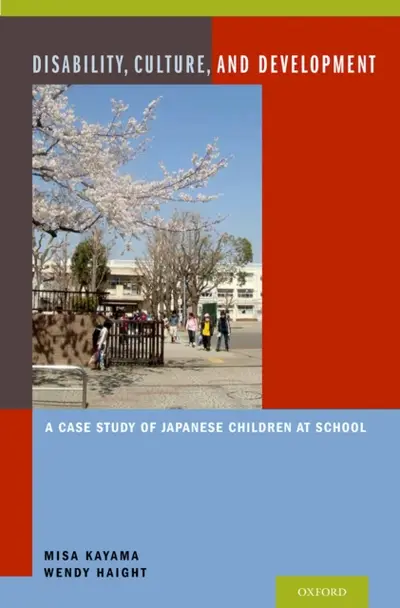
Disability, Culture, and Development
A Case Study of Japanese Children at School
Price and availability
$71.99
Available in: Andorra, Austria, Australia, Belgium, Bulgaria, Canada, Switzerland, Cyprus, Czechia, Germany, Denmark, Estonia, Spain, Finland, France, United Kingdom, Guernsey, Greece, Croatia, Hungary, Ireland, Isle of Man, Iceland, Italy, Jersey, Japan, Liechtenstein, Lithuania, Luxembourg, Latvia, Monaco, Malta, Netherlands, Norway, Poland, Portugal, Romania, Sweden, Slovenia, Slovakia, San Marino, United States, Vatican City, South Africa
Stores: US, UK, Canada, EU, Australia.
Sign in to buyThe price is re-checked by the server before payment.
For personal use under the eBook licence.
- Format
- DRM
- Not stated by the publisher
- Language
- English
- Publisher
- Oxford University Press
- Published
- 4 September 2013
- ISBN
- 9780199970834
- Subjects
- Japan, Disability: social aspects, Age groups: children, Social work, Clinical & internal medicine, JBFM, JBSP1, Social work, Clinical and internal medicine
About this book
This book examines Japanese cultural beliefs about disability and related socialization practices as they impact the experiences of elementary school-aged children. Physical and mental conditions which impair children's functioning are universal issues impacting child welfare and educational systems around the world. While the American approach is well understood and represented in the literature, cultures differ in which physical and mental conditions are considered 'disabling'. Currently, the Japanese educational system is in transition as public schools implement formal special education services for children with developmental disabilities. 'Developmental disabilities' is a new term used by Japanese educators to categorize a variety of relatively minor social and cognitive conditions caused by neurologically based deficits: learning disabilities such as dyslexia, ADHD, and Asperger's Syndrome. Children who were once considered 'difficult' or 'slow learners' are now considered to be 'disabled' and in need of special services. This transition created an excellent opportunity to explore Japanese beliefs about disability that might otherwise have remained unexamined by participants, and how these evolving beliefs and new socialization and educational practices impact children's experiences.
Bibliographic data © Gardners Books Ltd.