PDF · English
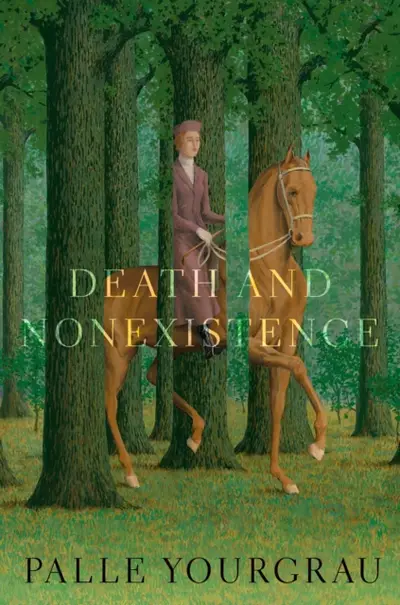
Death and Nonexistence
Price and availability
$81.99
Available in: Andorra, Austria, Australia, Belgium, Bulgaria, Canada, Switzerland, Cyprus, Czechia, Germany, Denmark, Estonia, Spain, Finland, France, United Kingdom, Guernsey, Greece, Croatia, Hungary, Ireland, Isle of Man, Iceland, Italy, Jersey, Japan, Liechtenstein, Lithuania, Luxembourg, Latvia, Monaco, Malta, Netherlands, Norway, Poland, Portugal, Romania, Sweden, Slovenia, Slovakia, San Marino, United States, Vatican City, South Africa
Stores: US, UK, Canada, EU, Australia.
Sign in to buyThe price is re-checked by the server before payment.
For personal use under the eBook licence.
- Format
- DRM
- Not stated by the publisher
- Language
- English
- Publisher
- Oxford University Press
- Published
- 3 July 2019
- ISBN
- 9780190247485
- Subjects
- Development studies, Philosophy: metaphysics & ontology, Philosophy: logic, Philosophy of mind, Human geography, The environment, Waste management, Reception or Interpretation studies / Audience Theory, QDTJ, QDTL, QDTM, Human geography, The environment, Waste management
About this book
The dead are gone. They count for nothing. Yet, if we count the dead, their number is staggering. And they account for most of what is great about civilization. Compared to the greatness of the dead, the accomplishments of the living are paltry. Which is it then: are the dead still there to be counted or not? And if they are still there, where exactly is "e;there"e;? We are confronted with the ancient paradox of nonexistence bequeathed us by Parmenides. The mystery of death is the mystery of nonexistence. A successful attempt to provide a metaphysics of death, then, must resolve the paradox of nonexistence. That is the aim of this study. At the same time, the metaphysics of death, of ceasing to exist, must serve as an account of birth, of coming to exist; the primary thesis of this book is that this demands going beyond existence and nonexistence to include what underlies both, which one can call, following tradition, "e;being."e; The dead and the unborn are therefore objects that lack existence but not being. Nonexistent objects - not corpses, or skeletons, or memories, all of which are existent objects - are what are "e;there"e; to be counted when we count the dead.
Bibliographic data © Gardners Books Ltd.