EPUB · English
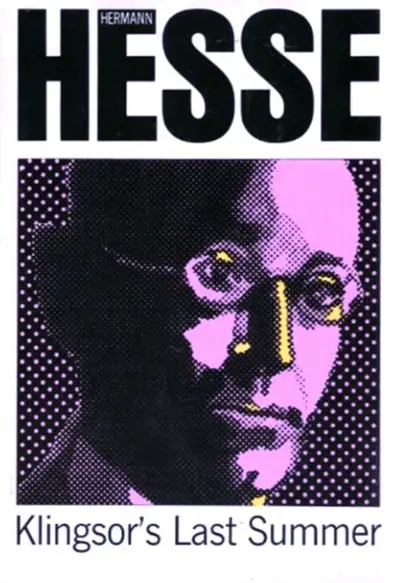
Klingsor's Last Summer
Price and availability
$20.99
Not available to buy yet.
Available in: Andorra, Austria, Australia, Belgium, Bulgaria, Canada, Switzerland, Cyprus, Czechia, Germany, Denmark, Estonia, Spain, Finland, France, United Kingdom, Guernsey, Greece, Croatia, Hungary, Ireland, Isle of Man, Iceland, Italy, Jersey, Japan, Liechtenstein, Lithuania, Luxembourg, Latvia, Monaco, Malta, Netherlands, Norway, Poland, Portugal, Romania, Sweden, Slovenia, Slovakia, San Marino, United States, Vatican City, South Africa
Stores: US, UK, Canada, EU, Australia.
This title cannot be bought in this store yet: its supplier terms, territorial rights or price are still being confirmed.
For personal use under the eBook licence.
- Format
- EPUB
- DRM
- Not stated by the publisher
- Language
- English
- Publisher
- Farrar, Straus and Giroux
- Published
- 22 January 2013
- ISBN
- 9781466835108
- Subjects
About this book
This is the first English-language edition of Klingsor's Last Summer, which was originally published in 1920, a year after Demian and two years before Siddhartha. The book has three parts: a story called A Child's Heart, followed by Klein and Wagner and Klingsor's Last Summer, Hesse's two longest and finest novellas. These novellas, along with Siddhartha (the three works were republished in 1931 under the title The Inward Way), are the first fruits of the period that began in the spring of 1919, when Hesse settled in the Ticino mountain village of Montagnola to start a new life without his wife and children.A Child's Heart, written in January 1919, in Basel, concerns the transmutation of a boy's innocence into knowledge of good and evil, and the painful guilt that accompanies this process.Both Klein and Wagner (written in May-June 1919, immediately after the arrival in Montagnola) and Klingsor's Last Summer (written shortly after) are set in a southern landscape that reflects Hesse's life that summer; both novellas have heroes who are more or less Hesse's age at the time; and in both the hero's death is preceded by a grand vision of unity in which the polarities of life are resoluved. Hesse exposes himself mercilessly in Klein and Wagner, a story of escape, wrenching loose, letting go. But the expressionist painter Klingsor is a more direct self-portrait of the Hesse of 1919.
Bibliographic data © Gardners Books Ltd.