EPUB · English
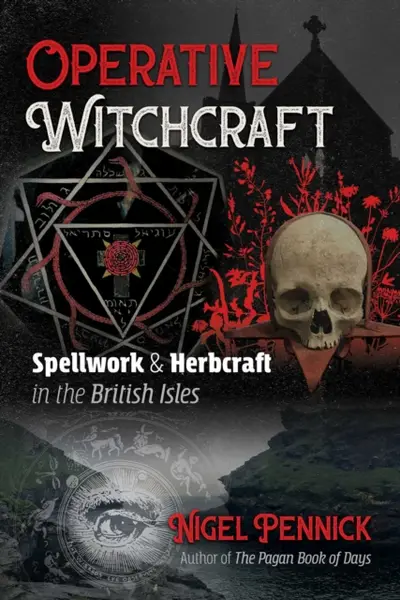
Operative Witchcraft
Spellwork and Herbcraft in the British Isles
Price and availability
$16.99
Available in: Andorra, Austria, Australia, Belgium, Bulgaria, Canada, Switzerland, Cyprus, Czechia, Germany, Denmark, Estonia, Spain, Finland, France, United Kingdom, Guernsey, Greece, Croatia, Hungary, Ireland, Isle of Man, Iceland, Italy, Jersey, Japan, Liechtenstein, Lithuania, Luxembourg, Latvia, Monaco, Malta, Netherlands, Norway, Poland, Portugal, Romania, Sweden, Slovenia, Slovakia, San Marino, United States, Vatican City, South Africa
Stores: US, UK, Canada, EU, Australia.
Sign in to buyThe price is re-checked by the server before payment.
For personal use under the eBook licence.
- Format
- EPUB
- DRM
- Not stated by the publisher
- Language
- English
- Publisher
- Inner Traditions/Bear & Company
- Published
- 8 October 2019
- ISBN
- 9781620558454
- Subjects
- United Kingdom, Great Britain, Folklore, myths & legends, Magic, spells & alchemy, Witchcraft & Wicca, Folklore studies / Study of myth, Magic, alchemy and hermetic thought, Witchcraft / Witches, Magic, spells and alchemy, Witchcraft and wicca
About this book
A comprehensive look at the history and practices of rural English witchcraft Explores witchs familiars and fetches, animal magic, and the forms of witchcraft practiced by rural tradespeople, such as blacksmiths, herbalists, and artisans Offers practical insight into spells, charms, folk incantations, herbal medicine practices, amulets, sigils, and tools of the craft Details the evolution of public perception of witchcraft throughout Englands history, including the laws against witchcraft in place until the 1950s and witchcrafts contentious relationship with the Christian church In this practical guide, Nigel Pennick takes the reader on a journey through the practice of operative witchcraft in the British Isles from the Middle Ages and the Elizabethan era to the decriminalization of witchcraft in the 1950s and its practice today. Highlighting uniquely English traditions, Pennick explores fetches and witchs familiars, animal magic, and the forms of witchcraft practiced by rural tradespeople, such as blacksmiths, herbalists, and artisans, to enhance their professional work and compel others to do their bidding, both man and beast. He provides actual spells, charms, and folk incantations, along with details about the magical use of a variety of herbs, including nightshades, the creation of amulets and sigils, protection against the Evil Eye, and the use of aromatic oils. Pennick explains the best times of day for different types of magic, how to identify places of power, and the use of the paraphernalia of operative witchcraft, such as the broom, the witches dial, and pins, nails and thorns. He explores the belief in three different types of witches: white witches, who offer help and healing for a fee; black witches, who harm others; and gray witches, who practice both white and black magic. Examining witchcrafts contentious relationship with the Christian church, he investigates the persecution of witches throughout the UK and the British West Indies up until the mid-20th century. He offers a look into the changing public perceptions of witchcraft and the treatment of its followers as well as revealing how English churchmen would offer magical solutions to the perceived threat of black witchcraft. Painting an in-depth picture of English witchcraft, including how it relates to and differs from modern Wicca, Pennick reveals the foundation from which modern witchcraft arose. He shows how this context is necessary to effectively use these ancient skills and techniques and how the evolution of witchcraft will continue harmonizing the old ways with the new.
Bibliographic data © Gardners Books Ltd.