EPUB · English
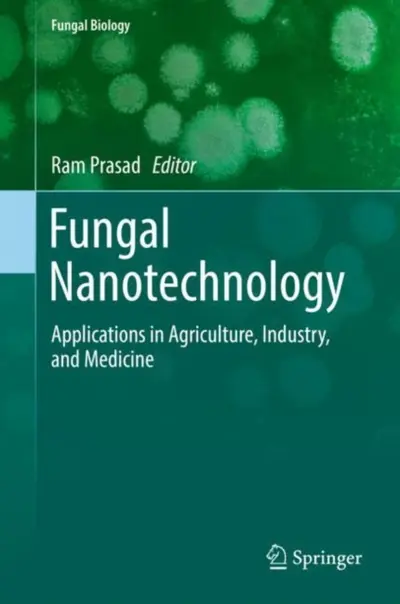
Fungal Nanotechnology
Applications in Agriculture, Industry, and Medicine
Price and availability
$175.99
Available in: Andorra, Austria, Australia, Belgium, Bulgaria, Canada, Switzerland, Cyprus, Czechia, Germany, Denmark, Estonia, Spain, Finland, France, United Kingdom, Guernsey, Greece, Croatia, Hungary, Ireland, Isle of Man, Iceland, Italy, Jersey, Japan, Liechtenstein, Lithuania, Luxembourg, Latvia, Monaco, Malta, Netherlands, Norway, Poland, Portugal, Romania, Sweden, Slovenia, Slovakia, San Marino, United States, Vatican City, South Africa
Stores: US, UK, Canada, EU, Australia.
Sign in to buyThe price is re-checked by the server before payment.
For personal use under the eBook licence.
- Format
- EPUB
- DRM
- Not stated by the publisher
- Language
- English
- Publisher
- Springer International Publishing
- Published
- 25 November 2017
- ISBN
- 9783319684246
- Subjects
- Ecological science, the Biosphere, Microbiology (non-medical), Mycology, fungi (non-medical), Plant reproduction & propagation, Nanotechnology, Agricultural science, Ecological science, the Biosphere, Microbiology (non-medical), Mycology, fungi, Botany and plant sciences, Biotechnology, Agricultural science
About this book
Fungal nanotechnology has great prospects for developing new products with industrial, agricultural, medicinal, and consumer applications in a wide range of sectors. The fields of chemical engineering, agri-food, biochemistry, pharmaceuticals, diagnostics, and medical device development all employ fungal products, with fungal nanomaterials currently used in applications ranging from drug development to the food industry and agricultural biotechnology. Fungal agents are an environmentally friendly, clean, non-toxic agent for the synthesis of metal nanoparticles and employ both intracellular and extracellular methods. The simplicity of scaling up and downstream processing and the presence of fungal mycelia which afford an increased surface area provide key advantages. In addition, the large spectrum of synthesized nanoparticle morphologies and the substantially faster biosynthesis rate in cell-free filtrate (due to the higher amount of proteins secreted in fungi) make this a particularlyenticing route. Understanding the diversity of fungi in assorted ecosystems, as well as their interactions with other microorganisms, animals, and plants, underpins real and innovative technological developments and the applications of metal nanoparticles in many disciplines including agriculture, catalysis, and biomedical biosensors. Importantly, biogenic fungal nanoparticles show significant synergistic characteristics when combined with antibiotics and fungicides to offer substantially greater resistance to microbial growth and applications in nanomedicine ranging from topical ointments and bandages for wound healing to coated stents.
Bibliographic data © Gardners Books Ltd.