EPUB · English
Laywoman Project
Remaking Catholic Womanhood in the Vatican II Era
Price and availability
$155.99
Available in: Andorra, Austria, Australia, Belgium, Bulgaria, Canada, Switzerland, Cyprus, Czechia, Germany, Denmark, Estonia, Spain, Finland, France, United Kingdom, Guernsey, Greece, Croatia, Hungary, Ireland, Isle of Man, Iceland, Italy, Jersey, Japan, Liechtenstein, Lithuania, Luxembourg, Latvia, Monaco, Malta, Netherlands, Norway, Poland, Portugal, Romania, Sweden, Slovenia, Slovakia, San Marino, United States, Vatican City, South Africa
Stores: US, UK, Canada, EU, Australia.
Sign in to buyThe price is re-checked by the server before payment.
For personal use under the eBook licence.
- Format
- EPUB
- DRM
- Not stated by the publisher
- Language
- English
- Publisher
- The University of North Carolina Press
- Published
- 24 February 2020
- ISBN
- 9781469654515
- Subjects
- USA, History of the Americas, Roman Catholicism, Roman Catholic Church, Gender studies: women, United States of America, USA, Gender studies: women and girls, History of the Americas, Roman Catholicism, Roman Catholic Church
About this book
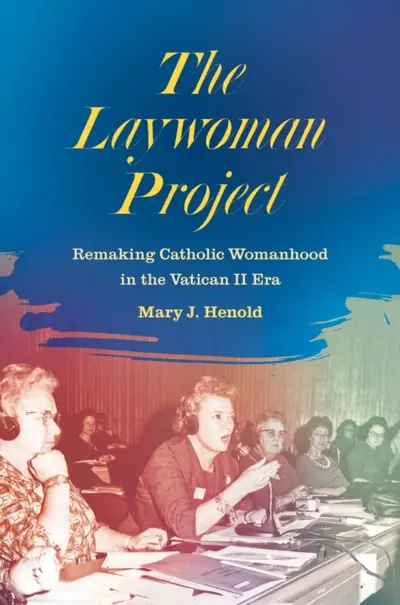
Summoning everyday Catholic laywomen to the forefront of twentieth-century Catholic history, Mary J. Henold considers how these committed parishioners experienced their religion in the wake of Vatican II (19621965). This era saw major changes within the heavily patriarchal religious faithat the same time as an American feminist revolution caught fire. Who was the Catholic woman for a new era? Henold uncovers a vast archive of writing, both intimate and public facing, by hundreds of rank-and-file American laywomen active in national laywomens groups, including the National Council of Catholic Women, the Catholic Daughters of America, and the Daughters of Isabella. These records evoke a formative period when laywomen played publicly with a surprising variety of ideas about their own position in the Catholic Church.While marginalized near the bottom of the church hierarchy, laywomen quietly but purposefully engaged both their religious and gender roles as changing circumstances called them into question. Some eventually chose feminism while others rejected it, but most, Henold says, crafted a middle position: even conservative, nonfeminist laywomen came to reject the idea that the church could adapt to the modern world while keeping womens status frozen in amber.
Bibliographic data © Gardners Books Ltd.