PDF · English
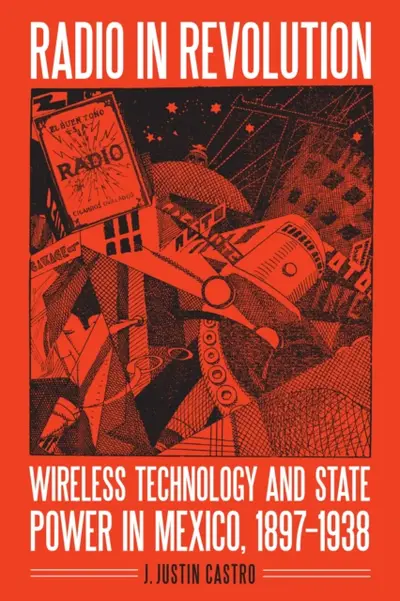
Radio in Revolution
Wireless Technology and State Power in Mexico, 1897-1938
Price and availability
$25.99
Available in: Andorra, Austria, Australia, Belgium, Bulgaria, Canada, Switzerland, Cyprus, Czechia, Germany, Denmark, Estonia, Spain, Finland, France, United Kingdom, Guernsey, Greece, Croatia, Hungary, Ireland, Isle of Man, Iceland, Italy, Jersey, Japan, Liechtenstein, Lithuania, Luxembourg, Latvia, Monaco, Malta, Netherlands, Norway, Poland, Portugal, Romania, Sweden, Slovenia, Slovakia, San Marino, United States, Vatican City, South Africa
Stores: US, UK, Canada, EU, Australia.
Sign in to buyThe price is re-checked by the server before payment.
For personal use under the eBook licence.
- Format
- DRM
- Not stated by the publisher
- Language
- English
- Publisher
- University of Nebraska Press
- Published
- 1 July 2016
- ISBN
- 9780803288744
- Subjects
- Mexico, 20th century, Radio, History of the Americas, 20th century history: c 1900 to c 2000, Revolutions, uprisings, rebellions, Caribbean islands, Latin America – Mexico, Central America, South America, Mexico, Politics and government, History of the Americas, Radio technology
About this book
Long before the Arab Spring and its use of social media demonstrated the potent intersection between technology and revolution, the Mexican Revolution employed wireless technology in the form of radiotelegraphy and radio broadcasting to alter the course of the revolution and influence how political leaders reconstituted the government.Radio in Revolution, an innovative study of early radio technologies and the Mexican Revolution, examines the foundational relationship between electronic wireless technologies, single-party rule, and authoritarian practices in Mexican media. J. Justin Castro bridges the Porfiriato and the Mexican Revolution, discussing the technological continuities and change that set the stage for Lzaro Crdenass famous radio decree calling for the expropriation of foreign oil companies. Not only did the nascent development of radio technology represent a major component in government plans for nation and state building, its interplay with state power in Mexico also transformed it into a crucial component of public communication services, national cohesion, military operations, and intelligence gathering. Castro argues that the revolution had far-reaching ramifications for the development of radio and politics in Mexico and reveals how continued security concerns prompted the revolutionary victors to view radio as a threat even while they embraced it as an essential component of maintaining control.
Bibliographic data © Gardners Books Ltd.