EPUB · English
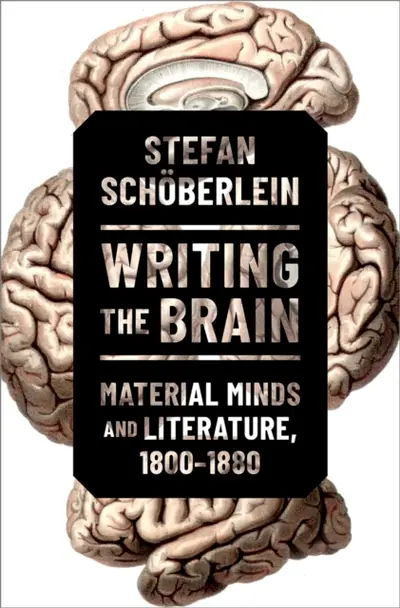
Writing the Brain
Material Minds and Literature, 1800-1880
Price and availability
$56.99
Available in: Andorra, Austria, Australia, Belgium, Bulgaria, Canada, Switzerland, Cyprus, Czechia, Germany, Denmark, Estonia, Spain, Finland, France, United Kingdom, Guernsey, Greece, Croatia, Hungary, Ireland, Isle of Man, Iceland, Italy, Jersey, Japan, Liechtenstein, Lithuania, Luxembourg, Latvia, Monaco, Malta, Netherlands, Norway, Poland, Portugal, Romania, Sweden, Slovenia, Slovakia, San Marino, United States, Vatican City, South Africa
Stores: US, UK, Canada, EU, Australia.
Sign in to buyThe price is re-checked by the server before payment.
For personal use under the eBook licence.
- Format
- EPUB
- DRM
- Not stated by the publisher
- Language
- English
- Publisher
- Oxford University Press
- Published
- 5 September 2023
- ISBN
- 9780197693698
- Subjects
- Film, TV & radio, Literary studies: c 1800 to c 1900, History of medicine, History of science, ATF, Literary studies: c 1800 to c 1900, History of medicine, History of science
About this book
In the nineteenth century, American and British culture experienced an explosion of interest in writings about the brain. The years between 1800 and 1880 are often described as the emergence of modern neuroscience, with new areas of the brain being discovered and named. Naming was quickly followed by a drive to hypothesize functioning, a process that suggested thinking itself may be a mere physiological act. In Writing the Brain, Stefan Schoberlein tracks how literature encountered such novel, scientific theories of cognition-and how it, in turn, shaped scientific thinking. Before the era of modern psychology, a heterogeneous group of alienists, self-help gurus, and anatomists proposed that the structure of the brain could be used to explain how the mind worked. Suddenly, nineteenth-century readers and writers had to contend with the idea that qualities once ascribed to disembodied souls may arise from a mere lump of cranial matter. In a period when scientists and literary writers frequently published in the same periodicals, the ensuing debate over the material mind was a public one. Writing the Brain demonstrates, by examining several canonical works and textual rediscoveries, that these exchanges not only influenced how poets and novelists fictionalized the mind but also how scientists thought and talked about their discoveries. From George Combe to Charles Dickens, from Emily Dickinson to Pliny Earle, from Benjamin Rush to Alfred Tennyson, 1800s debated what it means to have or, rather, be a brain.
Bibliographic data © Gardners Books Ltd.