EPUB · English
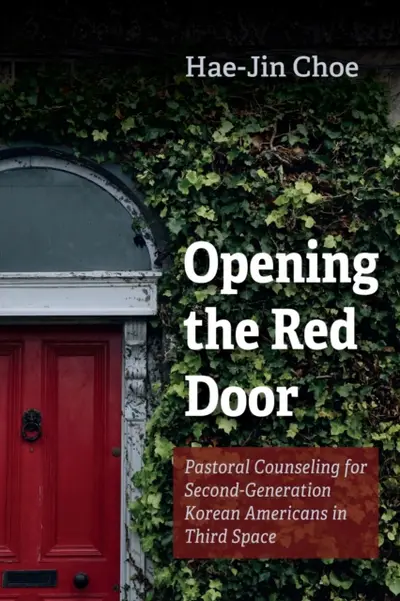
Opening the Red Door
Pastoral Counseling for Second-Generation Korean Americans in Third Space
Price and availability
$29.99
Available in: Andorra, Austria, Australia, Belgium, Bulgaria, Canada, Switzerland, Cyprus, Czechia, Germany, Denmark, Estonia, Spain, Finland, France, United Kingdom, Guernsey, Greece, Croatia, Hungary, Ireland, Isle of Man, Iceland, Italy, Jersey, Japan, Liechtenstein, Lithuania, Luxembourg, Latvia, Monaco, Malta, Netherlands, Norway, Poland, Portugal, Romania, Sweden, Slovenia, Slovakia, San Marino, United States, Vatican City, South Africa
Stores: US, UK, Canada, EU, Australia.
Sign in to buyThe price is re-checked by the server before payment.
For personal use under the eBook licence.
- Format
- EPUB
- DRM
- Not stated by the publisher
- Language
- English
- Publisher
- Wipf and Stock Publishers
- Published
- 14 April 2022
- ISBN
- 9781666711189
- Subjects
- Christian counselling, Christian ministry & pastoral activity, Religious & spiritual leaders, Christianity, Religious counselling, Religious and spiritual figures
About this book
Many second-generation Korean Americans (SGKAs) are living lives of marginality on the edge of Korean American and American cultures. This double life often leads to heightened mental health concerns. The rise of Asian hate crimes in this country in recent months have added to the distress in this population. Due to cultural stigma, however, SGKAs may not seek out counseling or other mental health services. If they do, their unique cultural formation is often not fully addressed, impeding growth and healing. Red Door Ministry (RDM), a pastoral counseling center that started at a local Korean-American church, serves as a model for addressing this issue. Built from a postcolonial understanding of third space, RDM is constructed with various culturally sensitive elements that allow SGKAs to move from places of shame on the margins to empowered new centers. This transformation is examined by four in-depth interviews of RDM clients. These clients show that healing and empowerment were possible because their complex cultural hybridity was addressed in the process of counseling. This process is analyzed using concepts from Western psychological theories, Korean American theology, and postcolonial theory.
Bibliographic data © Gardners Books Ltd.