PDF · English
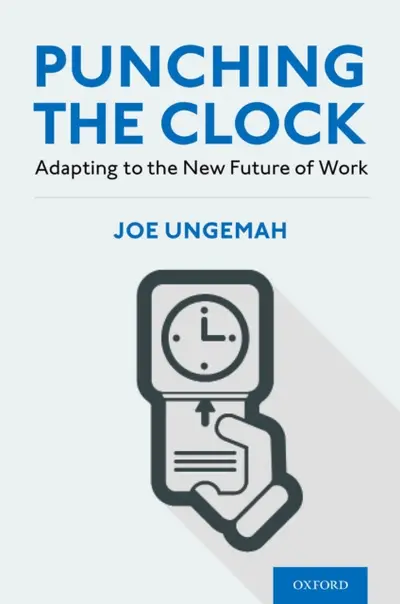
Punching the Clock
Adapting to the New Future of Work
Price and availability
$28.99
Available in: Andorra, Austria, Australia, Belgium, Bulgaria, Canada, Switzerland, Cyprus, Czechia, Germany, Denmark, Estonia, Spain, Finland, France, United Kingdom, Guernsey, Greece, Croatia, Hungary, Ireland, Isle of Man, Iceland, Italy, Jersey, Japan, Liechtenstein, Lithuania, Luxembourg, Latvia, Monaco, Malta, Netherlands, Norway, Poland, Portugal, Romania, Sweden, Slovenia, Slovakia, San Marino, United States, Vatican City, South Africa
Stores: US, UK, Canada, EU, Australia.
Sign in to buyThe price is re-checked by the server before payment.
For personal use under the eBook licence.
- Format
- DRM
- Not stated by the publisher
- Language
- English
- Publisher
- Oxford University Press
- Published
- 2 March 2021
- ISBN
- 9780190061258
- Subjects
- Occupational & industrial psychology, Organizational theory & behaviour, Occupational and industrial psychology, Organizational theory and behaviour
About this book
In the wake of the COVID-19 pandemic, trends already underway towards the Future of Work and the gig economy rapidly and unexpectantly accelerated. Physical isolation, travel restrictions, and social distancing challenged organizations to rethink how work gets done and by whom, with ramifications that will stretch beyond the pandemic. Punching the Clock explores how well workers are likely to both navigate and adapt to this new Future of Work, using the best of psychological science as a guide. Although the nature of work might have changed, the drives and needs of workers have not. Psychologists working across disciplines have amassed a deep understanding of these psychological forces, and when brought to bear on the changing workplace landscape, this knowledge can inform our ability to adapt and thrive. By drawing together cognitive, social, and organizational psychology with empirical research of the workplace, Ungemah examines the extent to which the Future of Work and the gig economy can be realized without breaking down the social fabric that holds the workplace together.
Bibliographic data © Gardners Books Ltd.