PDF · English
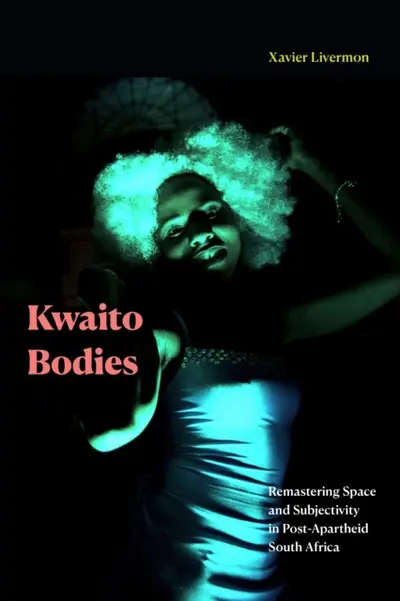
Kwaito Bodies
Remastering Space and Subjectivity in Post-Apartheid South Africa
Price and availability
$47.99
Available in: Andorra, Austria, Australia, Belgium, Bulgaria, Canada, Switzerland, Cyprus, Czechia, Germany, Denmark, Estonia, Spain, Finland, France, United Kingdom, Guernsey, Greece, Croatia, Hungary, Ireland, Isle of Man, Iceland, Italy, Jersey, Japan, Liechtenstein, Lithuania, Luxembourg, Latvia, Monaco, Malta, Netherlands, Norway, Poland, Portugal, Romania, Sweden, Slovenia, Slovakia, San Marino, United States, Vatican City, South Africa
Stores: US, UK, Canada, EU, Australia.
Sign in to buyThe price is re-checked by the server before payment.
For personal use under the eBook licence.
- Format
- DRM
- Not stated by the publisher
- Language
- English
- Publisher
- Duke University Press
- Published
- 24 April 2020
- ISBN
- 9781478007357
- Subjects
- Republic of South Africa, Theory of music & musicology, Electronic music, Gender studies, gender groups, Social & cultural anthropology, ethnography, Theory of music and musicology, AVLX, JBSF, Social and cultural anthropology
About this book
In Kwaito Bodies Xavier Livermon examines the cultural politics of the youthful black body in South Africa through the performance, representation, and consumption of kwaito, a style of electronic dance music that emerged following the end of apartheid. Drawing on fieldwork in Johannesburg's nightclubs and analyses of musical performances and recordings, Livermon applies a black queer and black feminist studies framework to kwaito. He shows how kwaito culture operates as an alternative politics that challenges the dominant constructions of gender and sexuality. Artists such as Lebo Mathosa and Mandoza rescripted notions of acceptable femininity and masculinity, while groups like Boom Shaka enunciated an Afrodiasporic politics. In these ways, kwaito culture recontextualizes practices and notions of freedom within the social constraints that the legacies of colonialism, apartheid, and economic inequality place on young South Africans. At the same time, kwaito speaks to the ways in which these legacies reverberate between cosmopolitan Johannesburg and the diaspora. In foregrounding this dynamic, Livermon demonstrates that kwaito culture operates as a site for understanding the triumphs, challenges, and politics of post-apartheid South Africa.
Bibliographic data © Gardners Books Ltd.