PDF · English
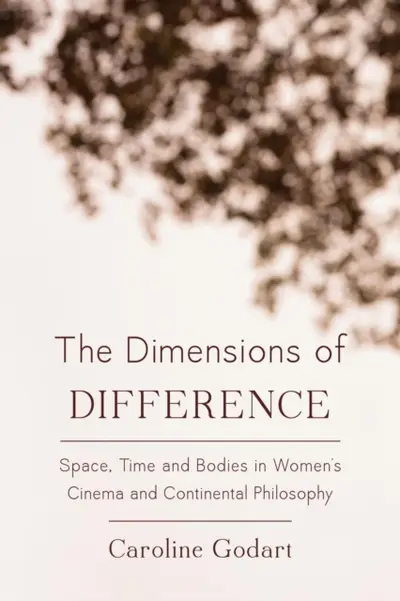
Dimensions of Difference
Space, Time and Bodies in Women’s Cinema and Continental Philosophy
Price and availability
$60.99
Available in: Andorra, Austria, Australia, Belgium, Bulgaria, Canada, Switzerland, Cyprus, Czechia, Germany, Denmark, Estonia, Spain, Finland, France, United Kingdom, Guernsey, Greece, Croatia, Hungary, Ireland, Isle of Man, Iceland, Italy, Jersey, Japan, Liechtenstein, Lithuania, Luxembourg, Latvia, Monaco, Malta, Netherlands, Norway, Poland, Portugal, Romania, Sweden, Slovenia, Slovakia, San Marino, United States, Vatican City, South Africa
Stores: US, UK, Canada, EU, Australia.
Sign in to buyThe price is re-checked by the server before payment.
For personal use under the eBook licence.
- Format
- DRM
- Not stated by the publisher
- Language
- English
- Publisher
- Bloomsbury Publishing (USA)
- Published
- 11 December 2015
- Pages
- 176
- ISBN
- 9781783486564
- Subjects
- Films, cinema, Film theory & criticism, Deconstructionism, Structuralism, Post-structuralism, Social & political philosophy, Feminism & feminist theory, ATF, ATFA, JBSF11, QDHR7, QDTS
About this book
The Dimensions of Difference departs from traditional takes on feminist film criticism, and in particular from the psychoanalytical focus on the gaze, to examine the question of sexual difference through three axes: space, time, and bodies. These are some of the most fundamental elements of cinema, which deploys the bodies of actors through space and time, for instance, through camerawork and editing.While this approach may not at first sight seem to be related to questions of gender and sexuality, Caroline Godart demonstrates its relevance to feminist film studies by weaving together careful analyses of space, time, and bodies in women's cinema with close readings of the same concepts in the works of three philosophers: Luce Irigaray, Henri Bergson, and Gilles Deleuze. The book investigates how certain films generate a cinematic experience of sexual difference, and frames this analysis within a careful philosophical inquiry into the notion of alterity itself. These tools provide fruitful resources for feminist inquiry, giving insights into sexual difference as it operates within film aesthetics and, beyond cinema, in the world at large. The result is a compelling reflection on feminism, film form, and continental philosophy.
Bibliographic data © Gardners Books Ltd.