EPUB · English
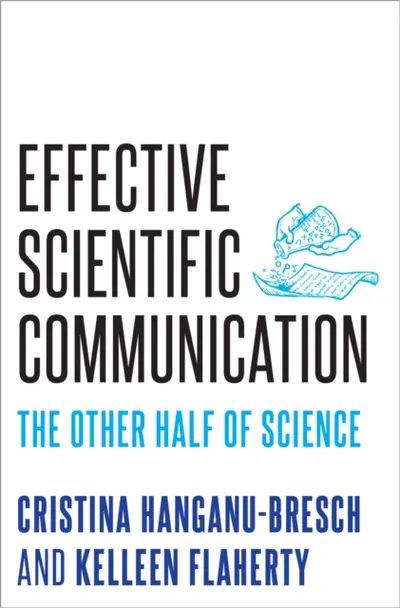
Effective Scientific Communication
The Other Half of Science
Price and availability
$50.99
Available in: Andorra, Austria, Australia, Belgium, Bulgaria, Canada, Switzerland, Cyprus, Czechia, Germany, Denmark, Estonia, Spain, Finland, France, United Kingdom, Guernsey, Greece, Croatia, Hungary, Ireland, Isle of Man, Iceland, Italy, Jersey, Japan, Liechtenstein, Lithuania, Luxembourg, Latvia, Monaco, Malta, Netherlands, Norway, Poland, Portugal, Romania, Sweden, Slovenia, Slovakia, San Marino, United States, Vatican City, South Africa
Stores: US, UK, Canada, EU, Australia.
Sign in to buyThe price is re-checked by the server before payment.
For personal use under the eBook licence.
- Format
- EPUB
- DRM
- Not stated by the publisher
- Language
- English
- Publisher
- Oxford University Press
- Published
- 22 July 2020
- ISBN
- 9780190646837
- Subjects
- Writing & editing guides, Scientific nomenclature & classification, Writing and editing guides, Scientific nomenclature and classification
About this book
Writing and the sciences are intricately linked. Without writing, science would not exist -- and could not be funded, communicated, replicated, enhanced, or applied. Further, writing helps scientists (and students) understand the science, explain the results of research in a greater context, and develop new ideas. Working from this philosophy, this book primarily addresses undergraduate STEM majors and minors who want or need to improve their scientific writing skills. Grounded in the basics of rhetorical research and scientific writing practices and guided by the authors' experiences in the classroom, this book makes the case that writing is an essential component of science regardless of the stage of the scientific process, and that it is in fact a component of thinking about science itself. Featuring student-centered stories that place each topic in context and suggestions for practice, Hanganu-Bresch and Flaherty arm STEM students with the skills to enhance critical thinking and cultivate good writing habits.
Bibliographic data © Gardners Books Ltd.