PDF · English
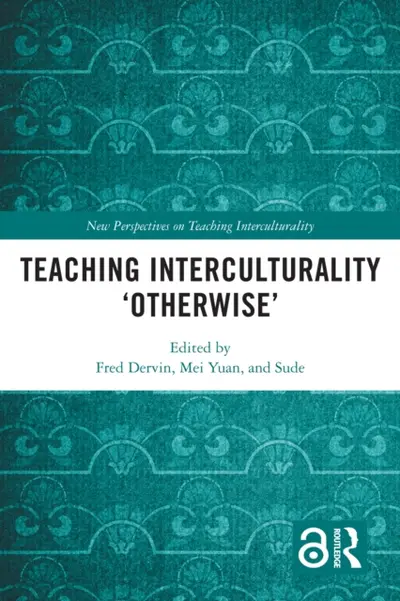
Teaching Interculturality 'Otherwise'
Price and availability
$44.99
Available in: Andorra, Austria, Australia, Belgium, Bulgaria, Canada, Switzerland, Cyprus, Czechia, Germany, Denmark, Estonia, Spain, Finland, France, United Kingdom, Guernsey, Greece, Croatia, Hungary, Ireland, Isle of Man, Iceland, Italy, Jersey, Japan, Liechtenstein, Lithuania, Luxembourg, Latvia, Monaco, Malta, Netherlands, Norway, Poland, Portugal, Romania, Sweden, Slovenia, Slovakia, San Marino, United States, Vatican City, South Africa
Stores: US, UK, Canada, EU, Australia.
Sign in to buyThe price is re-checked by the server before payment.
For personal use under the eBook licence.
- Format
- DRM
- Not stated by the publisher
- Language
- English
- Publisher
- Taylor and Francis Group
- Published
- 14 December 2022
- ISBN
- 9781000835885
- Subjects
- Asia, Regional studies, Ethnic minorities & multicultural studies, Education, Philosophy & theory of education, Educational strategies & policy, Multicultural education, Teaching skills & techniques, Teaching of a specific subject, Educational: Art & design, Educational: Social sciences, China, Regional / International studies, Philosophy and theory of education, Educational strategies and policy
About this book
This edited volume focuses on the thorny and somewhat controversial issue of teaching (and learning) interculturality in a way that considers the notion from critical and reflexive perspectives when introduced to students.Comprised of three parts, the book discusses the nuts and bolts of teaching interculturally, considers changes in the teaching of interculturality, and provides pedagogical insights into interculturalising the notion. It studies both teaching im-/explicitly about interculturality and how to incorporate interculturality into teaching practices or into an institution. By sharing varied cases and theoretical reflections on the topic, the editors and contributors from different parts of the world aim to stimulate more initiatives to enrich the field instead of delimiting it, especially in complement to and beyond the 'West' or 'Global North', and also to build up further reflexivity in the way readers engage with interculturality in education.This will be a must-read for teachers and researchers of intercultural communication education at different educational levels, as well as anyone interested in scholarship on education for interculturality. Chapter 3 of this book is freely available as a downloadable Open Access PDF at http://www.taylorfrancis.com under a Creative Commons 4.0 license.
Bibliographic data © Gardners Books Ltd.