EPUB · English
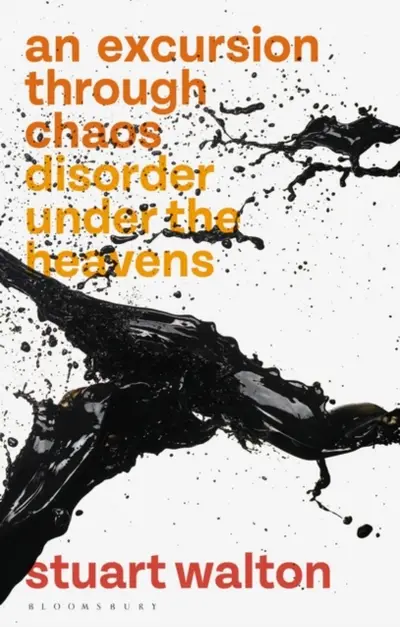
Excursion through Chaos
Disorder under the Heavens
Price and availability
$30.99
Available in: Andorra, Austria, Australia, Belgium, Bulgaria, Canada, Switzerland, Cyprus, Czechia, Germany, Denmark, Estonia, Spain, Finland, France, United Kingdom, Guernsey, Greece, Croatia, Hungary, Ireland, Isle of Man, Iceland, Italy, Jersey, Japan, Liechtenstein, Lithuania, Luxembourg, Latvia, Monaco, Malta, Netherlands, Norway, Poland, Portugal, Romania, Sweden, Slovenia, Slovakia, San Marino, United States, Vatican City, South Africa
Stores: US, UK, Canada, EU, Australia.
Sign in to buyThe price is re-checked by the server before payment.
For personal use under the eBook licence.
- Format
- EPUB
- DRM
- Not stated by the publisher
- Language
- English
- Publisher
- Bloomsbury Publishing
- Published
- 14 January 2021
- Pages
- 280
- ISBN
- 9781350144118
- Subjects
- Philosophy, Philosophy: aesthetics, Ethics & moral philosophy, Social & political philosophy, Chaos theory, Chaos theory, QD, QDTN, QDTQ, QDTS
About this book
From its original meaning as a gaping void, or the emptiness that precedes the whole of creation, chaos has taken on the exclusive meaning of confusion, pandemonium and mayhem. This definition has become the overarching word to describe any challenge to the established order; be it railway strikes or political dissent, any unexpected event is routinely described in the media and popular parlance as 'chaos'. In his incisive new study, Stuart Walton argues that this is a pitifully one-dimensional view of the world, as he looks to many of the great social, political, artistic and philosophical advances that have emerged from periods of disorder and from the refusal to think within the standard paradigms. Exploring this worldview, Walton contends that we are superstitious about states of affairs in which anything could happen because we have been taught to prefer the imposition of rules in every aspect of our lives, from our diets to our romances. Indeed, in An Excursion through Chaos he demonstrates how it is these very restrictions that are responsible for the alienation that has characterised postwar society, a state of disengagement that could have been avoided if we had taken a less fearful attitude towards the unravelling of order.
Bibliographic data © Gardners Books Ltd.