PDF · English
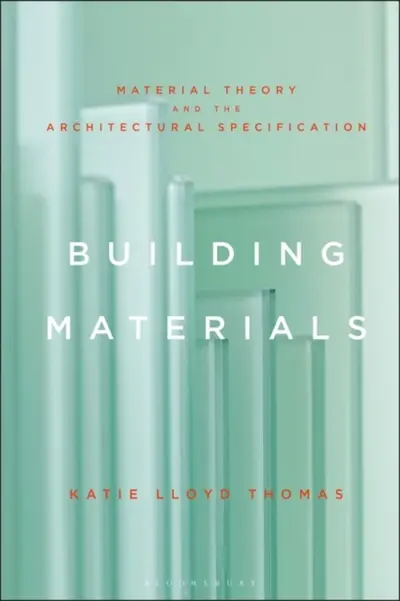
Building Materials
Material Theory and the Architectural Specification
Price and availability
$36.99
Available in: Andorra, Austria, Australia, Belgium, Bulgaria, Canada, Switzerland, Cyprus, Czechia, Germany, Denmark, Estonia, Spain, Finland, France, United Kingdom, Guernsey, Greece, Croatia, Hungary, Ireland, Isle of Man, Iceland, Italy, Jersey, Japan, Liechtenstein, Lithuania, Luxembourg, Latvia, Monaco, Malta, Netherlands, Norway, Poland, Portugal, Romania, Sweden, Slovenia, Slovakia, San Marino, United States, Vatican City, South Africa
Stores: US, UK, Canada, EU, Australia.
Sign in to buyThe price is re-checked by the server before payment.
For personal use under the eBook licence.
- Format
- DRM
- Not stated by the publisher
- Language
- English
- Publisher
- Bloomsbury Publishing
- Published
- 18 November 2021
- Pages
- 272
- ISBN
- 9781350176232
- Subjects
- Theory of architecture, Architectural structure & design, Materials science, Theory of architecture, Architectural structure and design, Materials science
About this book
At a time of unprecedented levels of change in the production of building materials and their deployment in construction, better theoretical and historical tools are needed to understand these new developments and how they are altering the practices and concepts of architecture. Building Materials offers a radical rethink of how materials, as they are constituted in architectural practice, are themselves constructed and, in turn, uncovers a vast and neglected resource of architectural writing about materials as they are mobilized in architecture.The book is unique in conceiving architectural specification as a starting point for architectural theory, arguing that how materials are prescribed - through a range of practices from the literal processes of procurement and manufacture to epistemological, contractual, social and economic frameworks - radically alters their potential in architecture. Drawing on the work of French philosopher Gilbert Simondon, as well as close readings of everyday specifications from the 18th to 21st centuries, the book reveals that materials do not pre-exist their shaping or use in the world, but come into being through the processes that constitute them.The book addresses three distinct methods of specification each through the lens of a different material 'naming' through timber, 'process-based' through concrete, and 'performance specification' through glass in turn revealing how the process of architectural specification (or 'Preliminary Operations' as Simondon puts it) allows for the development of specific relationships between material and function.
Bibliographic data © Gardners Books Ltd.