PDF · English
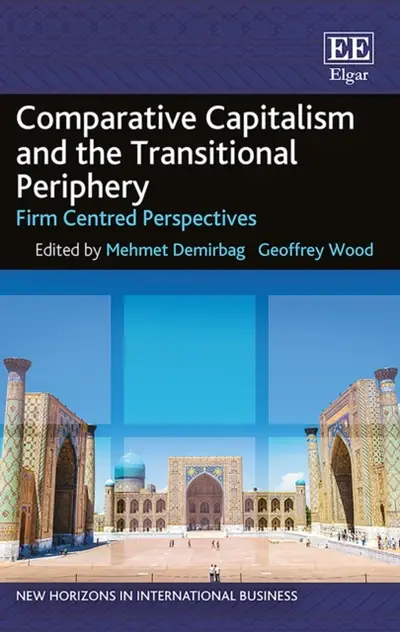
Comparative Capitalism and the Transitional Periphery
Firm Centred Perspectives
Price and availability
$33.99
Available in: Andorra, Austria, Australia, Belgium, Bulgaria, Canada, Switzerland, Cyprus, Czechia, Germany, Denmark, Estonia, Spain, Finland, France, United Kingdom, Guernsey, Greece, Croatia, Hungary, Ireland, Isle of Man, Iceland, Italy, Jersey, Japan, Liechtenstein, Lithuania, Luxembourg, Latvia, Monaco, Malta, Netherlands, Norway, Poland, Portugal, Romania, Sweden, Slovenia, Slovakia, San Marino, United States, Vatican City, South Africa
Stores: US, UK, Canada, EU, Australia.
Sign in to buyThe price is re-checked by the server before payment.
For personal use under the eBook licence.
- Format
- DRM
- Not stated by the publisher
- Language
- English
- Publisher
- Edward Elgar Publishing
- Published
- 26 October 2018
- ISBN
- 9781786430892
- Subjects
- International business, Multinationals, International business, Multinationals
About this book
An original and insightful book, this work focuses on domestic and overseas firms operating in those Central Asian and Eastern European countries considered to be the transitional economic periphery. Chapters shed light on their distinct forms of capitalism, and how it influences and adapts the firms located there. The eminent authors show how, in a post-state socialist world, there are several implications for both domestic and overseas firms functioning successfully in the transitional periphery. With the complex mix of political and market mediation and informal personal ties, chapters explore the delicate balance of liberalisation in transitional economies. Detailed examples from specific countries in Eurasia and Central Asia such as Belarus, Turkey, Azerbaijan, Mongolia, Uzbekistan, Armenia and Georgia are discussed alongside broader thematic issues of economic and social change, labour relations and human resource management. Most importantly, it is shown that liberalisation has little connection to short-term business growth. To succeed in such contexts, international firms need to be both pragmatic and creative, in coping with malleable yet durable forms of institutional mediation. Providing a unique perspective on the transitional economic periphery and much-needed insights from international business, this book is essential reading for researchers and graduate students studying transitional economies, non-traditional business models, institutional persistence and change, political and economic development and management in economically transitioning countries.
Bibliographic data © Gardners Books Ltd.