PDF · English
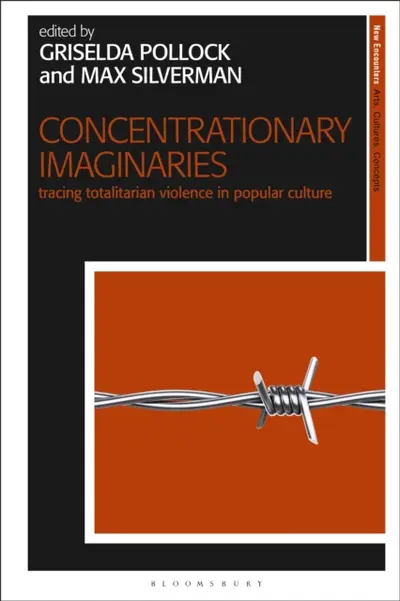
Concentrationary Imaginaries
Tracing Totalitarian Violence in Popular Culture
Price and availability
$34.99
Available in: Andorra, Austria, Australia, Belgium, Bulgaria, Canada, Switzerland, Cyprus, Czechia, Germany, Denmark, Estonia, Spain, Finland, France, United Kingdom, Guernsey, Greece, Croatia, Hungary, Ireland, Isle of Man, Iceland, Italy, Jersey, Japan, Liechtenstein, Lithuania, Luxembourg, Latvia, Monaco, Malta, Netherlands, Norway, Poland, Portugal, Romania, Sweden, Slovenia, Slovakia, San Marino, United States, Vatican City, South Africa
Stores: US, UK, Canada, EU, Australia.
Sign in to buyThe price is re-checked by the server before payment.
For personal use under the eBook licence.
- Format
- DRM
- Not stated by the publisher
- Language
- English
- Publisher
- Bloomsbury Publishing
- Published
- 30 November 2015
- Pages
- 320
- ISBN
- 9780857725448
- Subjects
- Theory of art, Photography & photographs, Films, cinema, Film theory & criticism, Philosophy: aesthetics, Cultural studies, Violence in society, Ethical issues & debates, Religious groups: social & cultural aspects, Jewish studies, Fascism & Nazism, Theory of art, Photography and photographs, ATF, ATFA, JBCC, JBFK, JBFV, JBSR, Far-right political ideologies and movements, QDTN
About this book
In 1945, French political prisoners returning from the concentration camps of Germany coined the phrase 'the concentrationary universe' to describe the camps as a terrible political experiment in the destruction of the human. This book shows how the unacknowledged legacy of a totalitarian mentality has seeped into the deepest recesses of everyday popular culture. It asks if the concentrationary now infests our cultural imaginary, normalizing what was once considered horrific and exceptional by transforming into entertainment violations of human life. Drawing on the political philosophy of Hannah Arendt and the analyses of violence by Agamben, Virilio, Lacoue-Labarthe and Nancy, it also offers close readings of films by Cavani and Haneke that identify and critically expose such an imaginary and, hence, contest its lingering force.
Bibliographic data © Gardners Books Ltd.