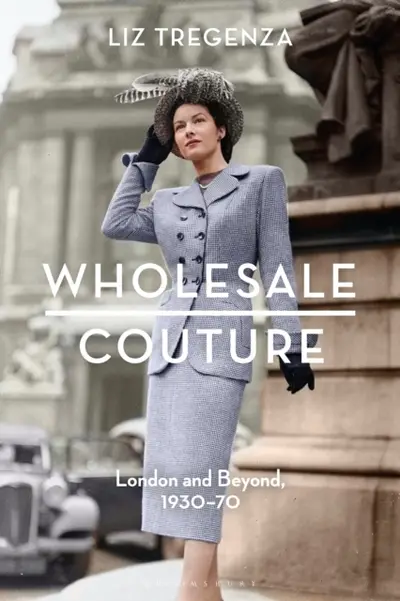
PDF · English
Wholesale Couture
London and Beyond, 1930-70
Price and availability
$35.99
Available in: Andorra, Austria, Australia, Belgium, Bulgaria, Canada, Switzerland, Cyprus, Czechia, Germany, Denmark, Estonia, Spain, Finland, France, United Kingdom, Guernsey, Greece, Croatia, Hungary, Ireland, Isle of Man, Iceland, Italy, Jersey, Japan, Liechtenstein, Lithuania, Luxembourg, Latvia, Monaco, Malta, Netherlands, Norway, Poland, Portugal, Romania, Sweden, Slovenia, Slovakia, San Marino, United States, Vatican City, South Africa
Stores: US, UK, Canada, EU, Australia.
Sign in to buyThe price is re-checked by the server before payment.
For personal use under the eBook licence.
- Format
- DRM
- Not stated by the publisher
- Language
- English
- Publisher
- Bloomsbury Publishing
- Published
- 23 February 2023
- Pages
- 248
- ISBN
- 9781350245877
- Subjects
- United Kingdom, Great Britain, 20th century, History of art & design styles: from c 1900 -, Fashion & textiles: design, History of fashion, Postwar 20th century history, from c 1945 to c 2000, Material culture, Fashion & beauty industries, 3MP, AGA, Fashion and textile design, JBCC2, Fashion and beauty industries, NH
About this book
The first book to consider the subject, Wholesale Couture: London and Beyond, 1930-70 seeks to revise the notion that wholesale couturiers were simply copyists and demonstrate the complexities of their design processes and business strategies. This term has fallen out of usage; however, it was used to describe the pinnacle of the British ready-to-wear fashion industry between the 1930s and 1960s. Companies within this sector have typically been recognised as creators of high-quality copies of French haute couture, using ready-to-wear techniques.Liz Tregenza traces wholesale couture garments from concept to usage, considering design, manufacture, branding, promotion, retail and export. She looks beyond the garments produced and investigates the people behind these firms, consequently demonstrating the significant role that largely Jewish immigrants played in the development and success of this industry. The book also considers the wider social and economic factors that affected manufacturers and consumers; the effect of austerity, rationing and the Utility scheme, and the pressing need for wholesale couturiers to export their products internationally. It demonstrates that 1946 was a critical year for re-building and re-imagining the London fashion industry and that wholesale couturiers were at the centre of these developments. Furthermore, it reveals the impact of changing consumer purchasing power, including the burgeoning youth market, for fashion manufacturers. Offering a new perspective on British fashion history, Wholesale Couture demonstrates that these couturiers were vital in cementing London's status as a ready-to-wear fashion centre.
Bibliographic data © Gardners Books Ltd.