EPUB · English
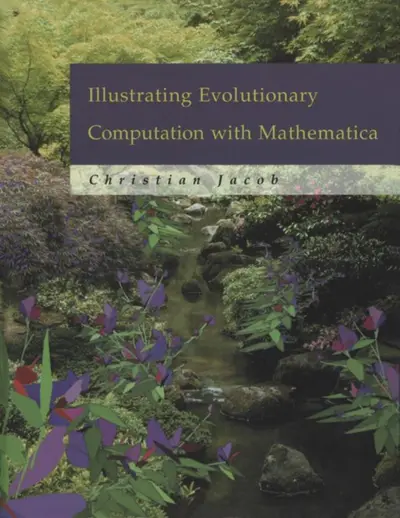
Illustrating Evolutionary Computation with Mathematica
Price and availability
$93.99
Available in: Andorra, Austria, Australia, Belgium, Bulgaria, Canada, Switzerland, Cyprus, Czechia, Germany, Denmark, Estonia, Spain, Finland, France, United Kingdom, Guernsey, Greece, Croatia, Hungary, Ireland, Isle of Man, Iceland, Italy, Jersey, Japan, Liechtenstein, Lithuania, Luxembourg, Latvia, Monaco, Malta, Netherlands, Norway, Poland, Portugal, Romania, Sweden, Slovenia, Slovakia, San Marino, United States, Vatican City, South Africa
Stores: US, UK, Canada, EU, Australia.
Sign in to buyThe price is re-checked by the server before payment.
For personal use under the eBook licence.
- Format
- EPUB
- DRM
- Not stated by the publisher
- Language
- English
- Publisher
- Elsevier Science
- Published
- 23 February 2001
- ISBN
- 9780080508450
- Subjects
- Algorithms & data structures, Artificial intelligence, Machine learning, Algorithms and data structures, Artificial intelligence (AI)
About this book
An essential capacity of intelligence is the ability to learn. An artificially intelligent system that could learn would not have to be programmed for every eventuality; it could adapt to its changing environment and conditions just as biological systems do. Illustrating Evolutionary Computation with Mathematica introduces evolutionary computation to the technically savvy reader who wishes to explore this fascinating and increasingly important field. Unique among books on evolutionary computation, the book also explores the application of evolution to developmental processes in nature, such as the growth processes in cells and plants. If you are a newcomer to the evolutionary computation field, an engineer, a programmer, or even a biologist wanting to learn how to model the evolution and coevolution of plants, this book will provide you with a visually rich and engaging account of this complex subject.* Introduces the major mechanisms of biological evolution.* Demonstrates many fascinating aspects of evolution in nature with simple, yet illustrative examples.* Explains each of the major branches of evolutionary computation: genetic algorithms, genetic programming, evolutionary programming, and evolution strategies.* Demonstrates the programming of computers by evolutionary principles using Evolvica, a genetic programming system designed by the author.* Shows in detail how to evolve developmental programs modeled by cellular automata and Lindenmayer systems.* Provides Mathematica notebooks on the Web that include all the programs in the book and supporting animations, movies, and graphics.
Bibliographic data © Gardners Books Ltd.