PDF · English
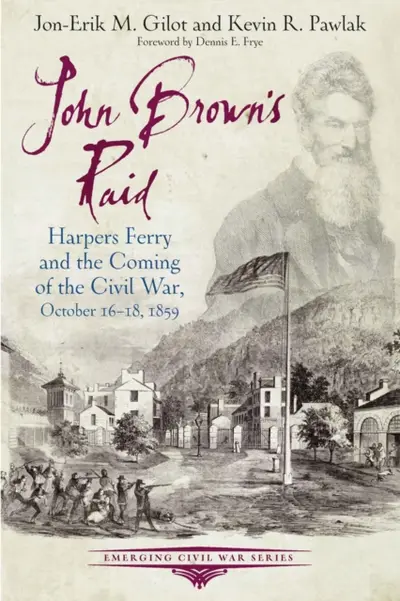
John Brown's Raid
Harpers Ferry and the Coming of the Civil War, October 16-18, 1859
Price and availability
$16.99
Available in: Andorra, Austria, Australia, Belgium, Bulgaria, Canada, Switzerland, Cyprus, Czechia, Germany, Denmark, Estonia, Spain, Finland, France, United Kingdom, Guernsey, Greece, Croatia, Hungary, Ireland, Isle of Man, Iceland, Italy, Jersey, Japan, Liechtenstein, Lithuania, Luxembourg, Latvia, Monaco, Malta, Netherlands, Norway, Poland, Portugal, Romania, Sweden, Slovenia, Slovakia, San Marino, United States, Vatican City, South Africa
Stores: US, UK, Canada, EU, Australia.
Sign in to buyThe price is re-checked by the server before payment.
For personal use under the eBook licence.
- Format
- DRM
- Not stated by the publisher
- Language
- English
- Publisher
- Savas Beatie
- Published
- 31 March 2023
- ISBN
- 9781611215984
- Subjects
- USA, c 1800 to c 1900, History of the Americas, Modern history to 20th century: c 1700 to c 1900, Slavery & abolition of slavery, Military history, Battles & campaigns, History of the Americas, Slavery, enslaved persons and abolition of slavery
About this book
An "e;excellent"e; account of the failed nighttime raid at Harpers Ferry in 1859 and the fiery abolitionist who led it (The NYMAS Review). The first shot of the American Civil War was not fired on April 12, 1861, in Charleston, South Carolina, but instead came on October 16, 1859, in Harpers Ferry, Virginia or so claimed former slave turned abolitionist Frederick Douglass. John Brown, the infamous fighter on the Kansas plains and detester of slavery, led a band of nineteen men on a desperate nighttime raid that targeted the Federal arsenal at Harpers Ferry. There, they planned to begin a war to end slavery in the United States. But after thirty-six tumultuous hours, John Brown's raid failed, and Brown himself became a prisoner of the state of Virginia. Brown's subsequent trial further divided north and south on the issue of slavery as Brown justified his violent actions to a national audience forced to choose sides. Ultimately, Southerners cheered Brown's death at the gallows while Northerners observed it with reverence. The nation's dividing line had been drawn. Herman Melville and Walt Whitman extolled Brown as a "e;meteor"e; of the war. Roughly one year after Brown and his men attacked slavery in Virginia, the nation split apart, fueled by Brown's fiery actions. John Brown's Raid tells the story of this historical milestone on the path to disunion. Filled with maps and images, it also includes a driving and walking tour of sites related to Brown's Raid so visitors today can follow the path of America's meteor.
Bibliographic data © Gardners Books Ltd.