EPUB · English
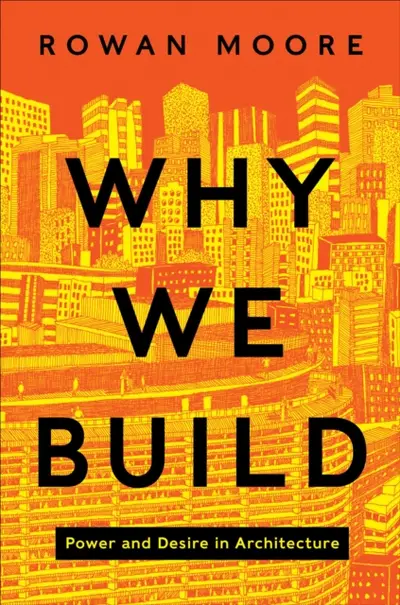
Why We Build
Power and Desire in Architecture
Price and availability
$13.99
Available in: Andorra, Austria, Belgium, Bulgaria, Canada, Switzerland, Cyprus, Czechia, Germany, Denmark, Estonia, Spain, Finland, France, Greece, Croatia, Hungary, Iceland, Italy, Japan, Liechtenstein, Lithuania, Luxembourg, Latvia, Monaco, Malta, Netherlands, Norway, Poland, Portugal, Romania, Sweden, Slovenia, Slovakia, San Marino, United States, Vatican City
Stores: US, Canada, EU (some countries).
Sign in to buyThe price is re-checked by the server before payment.
For personal use under the eBook licence.
- Format
- EPUB
- DRM
- Not stated by the publisher
- Language
- English
- Publisher
- HarperCollins
- Published
- 20 August 2013
- ISBN
- 9780062277596
- Subjects
- c 1700 to c 1800, c 1800 to c 1900, 20th century, 21st century, City & town planning - architectural aspects, History of architecture, City and town planning: architectural aspects, History of architecture
About this book
In an era of brash, expensive, provocative new buildings, a prominent critic argues that emotions-such as hope, power, sex, and our changing relationship to the idea of home-are the most powerful force behind architecture, yesterday and (especially) today. We are living in the most dramatic period in architectural history in more than half a century: a time when cityscapes are being redrawn on a yearly basis, architects are testing the very idea of what a building is, and whole cities are being invented overnight in exotic locales or here in the United States. Now, in a bold and wide-ranging new work, Rowan Moore former director of the Architecture Foundation, now the architecture critic for The Observer explores the reasons behind these changes in our built environment, and how they in turn are changing the way we live in the world. Taking as his starting point dramatic examples such as the High Line in New York City and the outrageous island experiment of Dubai, Moore then reaches far and wide: back in time to explore the Covent Garden brothels of eighteenth-century London and the fetishistic minimalism of Adolf Loos; across the world to assess a software magnate's grandiose mansion in Atlanta and Daniel Libeskind's failed design for the World Trade Center site; and finally to the deeply naturalistic work of Lina Bo Bardi, whom he celebrates as the most underrated architect of the modern era.
Bibliographic data © Gardners Books Ltd.