EPUB · English
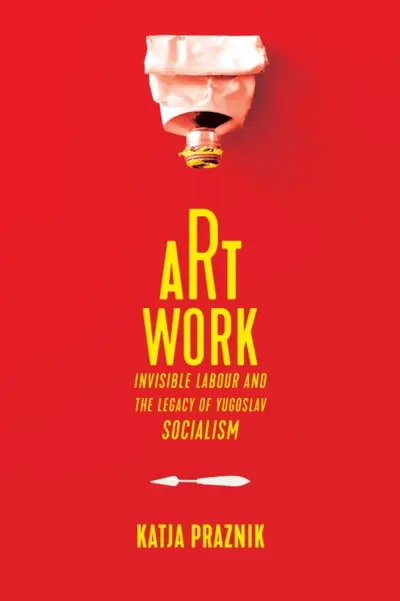
Art Work
Invisible Labour and the Legacy of Yugoslav Socialism
Price and availability
$71.99
Available in: Andorra, Austria, Australia, Belgium, Bulgaria, Canada, Switzerland, Cyprus, Czechia, Germany, Denmark, Estonia, Spain, Finland, France, United Kingdom, Guernsey, Greece, Croatia, Hungary, Ireland, Isle of Man, Iceland, Italy, Jersey, Japan, Liechtenstein, Lithuania, Luxembourg, Latvia, Monaco, Malta, Netherlands, Norway, Poland, Portugal, Romania, Sweden, Slovenia, Slovakia, San Marino, United States, Vatican City, South Africa
Stores: US, UK, Canada, EU, Australia.
Sign in to buyThe price is re-checked by the server before payment.
For personal use under the eBook licence.
- Format
- EPUB
- DRM
- Not stated by the publisher
- Language
- English
- Publisher
- University of Toronto Press
- Published
- 29 June 2021
- Pages
- 232
- ISBN
- 9781487538194
- Subjects
- Yugoslavia & former Yugoslavia, Art & design styles: from c 1960, Social mobility, Social groups, Social classes, Industrial relations, health & safety, Industrial relations, Strikes, Trade unions, Industrial arbitration & negotiation, AGA, JBFQ, JBS, JBSA, Industrial relations, occupational health and safety, KNXN, KNXU
About this book
In Art Work, Katja Praznik counters the Western understanding of art - as a passion for self-expression and an activity done out of love, without any concern for its financial aspects - and instead builds a case for understanding art as a form of invisible labour. Focusing on the experiences of art workers and the history of labour regulation in the arts in socialist Yugoslavia, Praznik helps elucidate the contradiction at the heart of artistic production and the origins of the mystification of art as labour.This profoundly interdisciplinary book highlights the Yugoslav socialist model of culture as the blueprint for uncovering the interconnected aesthetic and economic mechanisms at work in the exploitation of artistic labour. It also shows the historical trajectory of how policies toward art and artistic labour changed by the end of the 1980s. Calling for a fundamental rethinking of the assumptions behind Western art and exploitative labour practices across the world, Art Work will be of interest to scholars in East European studies, art theory, and cultural policy, as well as to practicing artists.
Bibliographic data © Gardners Books Ltd.