PDF · English
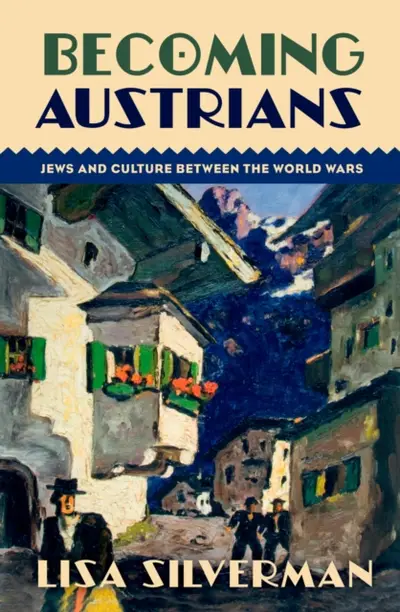
Becoming Austrians
Jews and Culture between the World Wars
Price and availability
$36.99
Available in: Andorra, Austria, Australia, Belgium, Bulgaria, Canada, Switzerland, Cyprus, Czechia, Germany, Denmark, Estonia, Spain, Finland, France, United Kingdom, Guernsey, Greece, Croatia, Hungary, Ireland, Isle of Man, Iceland, Italy, Jersey, Japan, Liechtenstein, Lithuania, Luxembourg, Latvia, Monaco, Malta, Netherlands, Norway, Poland, Portugal, Romania, Sweden, Slovenia, Slovakia, San Marino, United States, Vatican City, South Africa
Stores: US, UK, Canada, EU, Australia.
Sign in to buyThe price is re-checked by the server before payment.
For personal use under the eBook licence.
- Format
- DRM
- Not stated by the publisher
- Language
- English
- Publisher
- Oxford University Press
- Published
- 19 June 2012
- ISBN
- 9780199794881
- Subjects
- Central Europe, Austria, 20th century, c 1918 to c 1939 (Inter-war period), European history, 20th century history: c 1900 to c 2000, Postwar 20th century history, from c 1945 to c 2000, Social & cultural history, Jewish studies, 3MP, 3MPBG, JBSR, NH, NHD, NHTB
About this book
The collapse of Austria-Hungary in 1918 left all Austrians in a state of political, social, and economic turmoil, but Jews in particular found their lives shaken to the core. Although Jews' former comfort zone suddenly disappeared, the dissolution of the Dual Monarchy also created plenty of room for innovation and change in the realm of culture. Jews eagerly took up the challenge to fill this void, and they became heavily invested in culture as a way to shape their new, but also vexed, self-understandings. By isolating the years between the World Wars and examining formative events in both Vienna and the provinces, Becoming Austrians: Jews and Culture between the World Wars demonstrates that an intensified marking of people, places, and events as "e;Jewish"e; accompanied the crises occurring in the wake of Austria-Hungary's collapse, with profound effects on Austria's cultural legacy. In some cases, the consequences of this marking resulted in grave injustices. Philipp Halsmann, for example, was wrongfully imprisoned for the murder of his father years before he became a world-famous photographer. And the men who shot and killed writer Hugo Bettauer and philosopher Moritz Schlick received inadequate punishment for their murderous deeds. But engagements with the terms of Jewish difference also characterized the creation of culture, as shown in Hugo Bettauer's satirical novel The City without Jews and its film adaptation, other texts by Veza Canetti, David Vogel, A.M. Fuchs, Vicki Baum, and Mela Hartwig, and performances at the Salzburg Festival and the Yiddish theater in Vienna. By examining the lives, works, and deeds of a broad range of Austrians, Lisa Silverman reveals how the social codings of politics, gender, and nation received a powerful boost when articulated along the lines of Jewish difference.
Bibliographic data © Gardners Books Ltd.