PDF · English
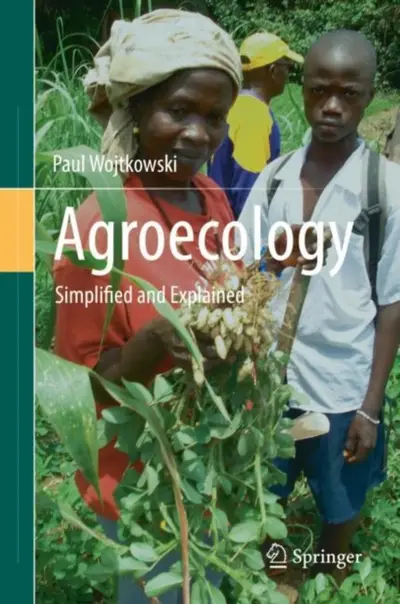
Agroecology
Simplified and Explained
- Economics, business & finance
- Science & mathematics
- Nature, environment & geography
- Technology & engineering
Price and availability
$175.99
Available in: Andorra, Austria, Australia, Belgium, Bulgaria, Canada, Switzerland, Cyprus, Czechia, Germany, Denmark, Estonia, Spain, Finland, France, United Kingdom, Guernsey, Greece, Croatia, Hungary, Ireland, Isle of Man, Iceland, Italy, Jersey, Japan, Liechtenstein, Lithuania, Luxembourg, Latvia, Monaco, Malta, Netherlands, Norway, Poland, Portugal, Romania, Sweden, Slovenia, Slovakia, San Marino, United States, Vatican City, South Africa
Stores: US, UK, Canada, EU, Australia.
Sign in to buyThe price is re-checked by the server before payment.
For personal use under the eBook licence.
- Format
- DRM
- Not stated by the publisher
- Language
- English
- Publisher
- Springer International Publishing
- Published
- 26 March 2019
- ISBN
- 9783319932095
- Subjects
- Environmental economics, Ecological science, the Biosphere, Botany & plant sciences, Applied ecology, Environmental science, engineering & technology, Agriculture & farming, Agricultural science, Environmental economics, Ecological science, the Biosphere, Botany and plant sciences, The environment, Agricultural science
About this book
This book presents the core elements that underwrite agroecology. Expressed across twelve chapters, the universality of the core is the essence of agroecology. This alone would be of interest to researchers, students, and academics. Furthermore, the book contains a long, detailed, and inclusive glossary that, with over 160 entries, elaborates on the topics presented. Included are recent developments as well as time-tested, traditional farm practices. The book also advances the theoretical base, fills gaps in the published research, and suggests future opportunities and future directions. The book is internationally oriented, presenting both temperate and tropical agriculture.The book begins by comparing agroecology against conventional, monoculturally-based agriculture. In doing so, it defines the unique features of agroecology and their significance in achieving sustainable and environmentally-friendly agriculture. The book goes on to discuss the underlying technologies, the various manifestations of biodiversity, and the risk countermeasures associated with agroecology. This includes the farm landscape as a positive base for ecology, and how, if used well, it can produce major economic growth. The book concludes by summarizing the key findings, and assessing the macro-challenges facing agroecology.
Bibliographic data © Gardners Books Ltd.