EPUB · English
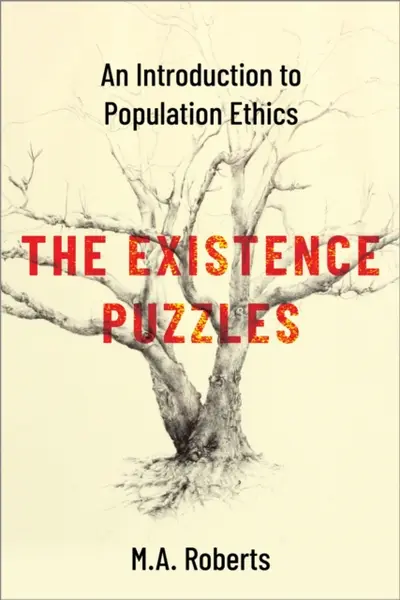
Existence Puzzles
An Introduction to Population Ethics
Price and availability
$56.99
Available in: Andorra, Austria, Australia, Belgium, Bulgaria, Canada, Switzerland, Cyprus, Czechia, Germany, Denmark, Estonia, Spain, Finland, France, United Kingdom, Guernsey, Greece, Croatia, Hungary, Ireland, Isle of Man, Iceland, Italy, Jersey, Japan, Liechtenstein, Lithuania, Luxembourg, Latvia, Monaco, Malta, Netherlands, Norway, Poland, Portugal, Romania, Sweden, Slovenia, Slovakia, San Marino, United States, Vatican City, South Africa
Stores: US, UK, Canada, EU, Australia.
Sign in to buyThe price is re-checked by the server before payment.
For personal use under the eBook licence.
- Format
- EPUB
- DRM
- Not stated by the publisher
- Language
- English
- Publisher
- Oxford University Press
- Published
- 12 January 2024
- ISBN
- 9780197544167
- Subjects
- Ethics & moral philosophy, Social & political philosophy, QDTQ, QDTS
About this book
Population ethics challenges moral theories we previously considered compelling and throws into relief the practical problems--including those relating to climate change and procreative privacy--moral agents all face. Population ethics has thus emerged in recent years as among the most significant areas in moral philosophy. M. A. Roberts introduces the newcomer to population ethics while at the same time investigating the key issues in a way that will be of interest to professional philosophers, economists, and lawyers seeking to understand what a cogent, plausible theory of population will look like. Roberts avoids the method of presenting a theory and then applying that theory to stock problem cases. Rather, she invites the reader to work through five perplexing but riveting puzzles each rooted in the question whether bringing additional people into existence--on its own--makes the world morally better. Each of her "e;existence puzzles"e;--the Asymmetry Puzzle, the Pareto Puzzle, the Addition Puzzle, the Anonymity Puzzle, and the Better Chance Puzzle--either already is or shall soon become a critically important part of the population ethics literature. Roberts proposes solutions to the puzzles that together form a partial theory of population, a collection of principles grounded in intuition but highly sensitive to the formal demands of consistency and cogency.
Bibliographic data © Gardners Books Ltd.