PDF · English
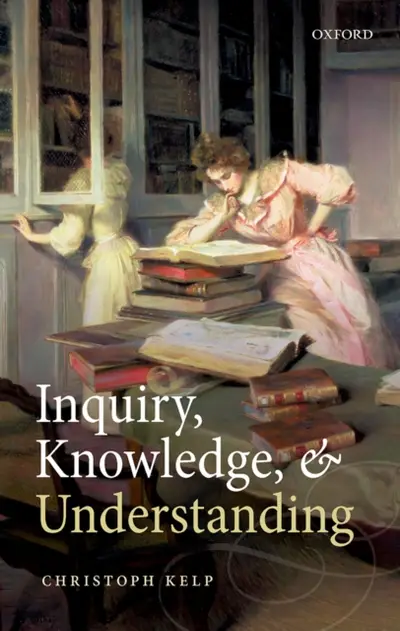
Inquiry, Knowledge, and Understanding
Price and availability
$79.99
Available in: Andorra, Austria, Australia, Belgium, Bulgaria, Canada, Switzerland, Cyprus, Czechia, Germany, Denmark, Estonia, Spain, Finland, France, United Kingdom, Guernsey, Greece, Croatia, Hungary, Ireland, Isle of Man, Iceland, Italy, Jersey, Japan, Liechtenstein, Lithuania, Luxembourg, Latvia, Monaco, Malta, Netherlands, Norway, Poland, Portugal, Romania, Sweden, Slovenia, Slovakia, San Marino, United States, Vatican City, South Africa
Stores: US, UK, Canada, EU, Australia.
Sign in to buyThe price is re-checked by the server before payment.
For personal use under the eBook licence.
- Format
- DRM
- Not stated by the publisher
- Language
- English
- Publisher
- Oxford University Press
- Published
- 1 April 2021
- ISBN
- 9780192649416
- Subjects
- Philosophy: epistemology & theory of knowledge, Ethics & moral philosophy, Philosophy: epistemology and theory of knowledge, Ethics and moral philosophy
About this book
Inquiry, Knowledge, and Understanding takes inquiry as the starting point for epistemological theorising. It uses this idea to develop new and systematic answers to some of the most fundamental questions in epistemology, including about the nature of core epistemic phenomena (most importantly: knowledge and understanding) as well as their value and the extent to which we possess them. Christoph Kelp argues that knowledge is the constitutive aim of inquiry into specific questions and that understanding is the constitutive aim of inquiry into general phenomena. He shows that these claims shed light on the nature of knowledge and understanding. He develops non-reductive 'network' analyses for both knowledge and understanding which elucidate the nature of knowledge and understanding in terms of their place in inquiry. Activities with constitutive aims, including inquiry, constitute critical domains of value in which the constitutive aim corresponds to a for-its-own-sake value relative to this domain. This study uses this idea to explain which epistemic phenomena are epistemically valuable for their own sake and to develop new solutions to a range of important value problems in epistemology, including the time-honoured Meno problem: knowledge is more valuable than mere true belief because it is the constitutive aim of inquiry, and thus epistemically valuable for its own sake.
Bibliographic data © Gardners Books Ltd.