PDF · English
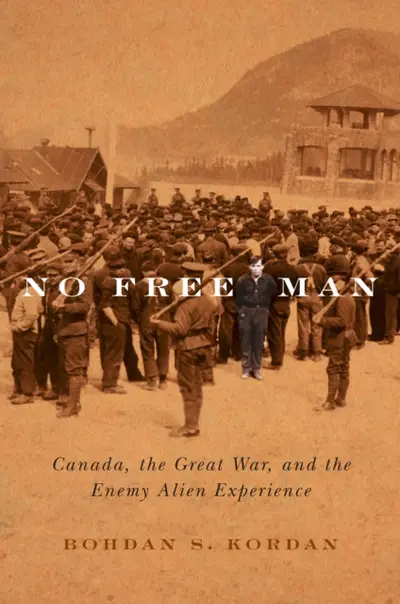
No Free Man
Canada, the Great War, and the Enemy Alien Experience
Price and availability
$44.99
Available in: Andorra, Austria, Australia, Belgium, Bulgaria, Canada, Switzerland, Cyprus, Czechia, Germany, Denmark, Estonia, Spain, Finland, France, United Kingdom, Guernsey, Greece, Croatia, Hungary, Ireland, Isle of Man, Iceland, Italy, Jersey, Japan, Liechtenstein, Lithuania, Luxembourg, Latvia, Monaco, Malta, Netherlands, Norway, Poland, Portugal, Romania, Sweden, Slovenia, Slovakia, San Marino, United States, Vatican City, South Africa
Stores: US, UK, Canada, EU, Australia.
Sign in to buyThe price is re-checked by the server before payment.
For personal use under the eBook licence.
- Format
- DRM
- Not stated by the publisher
- Language
- English
- Publisher
- McGill-Queen's University Press
- Published
- 1 September 2016
- ISBN
- 9780773599635
- Subjects
- Canada, 20th century, History of the Americas, Social & cultural history, First World War, Political control & freedoms, Canada, 3MP, Political control and freedoms, NHK, NHTB, NHWR5
About this book
Approximately 8,000 Canadian civilians were imprisoned during the First World War because of their ethnic ties to Germany, Austria-Hungary, and other enemy nations. Although not as well-known as the later internments of Japanese Canadians during the Second World War, these incarcerations played a crucial role in shaping debates about Canadian citizenship, diversity, and loyalty. Tracing the evolution and consequences of Canadian government policy towards immigrants of enemy nationality, No Free Man is a nuanced work that acknowledges both the challenges faced by the Government of Canada as well as the experiences of internees and their families. Bohdan Kordan gives particular attention to the ways in which the political and legal status of enemy subjects configured the policy and practice of internment and how this process - magnified by the challenges of the war - affected the broader concerns of public order and national security. Placing the issue of internment within the wider context of community and belonging, Kordan further delves into the ways that wartime turbulence and anxieties shaped public attitudes towards the treatment of enemy aliens. He concludes that Canada's leadership failed to protect immigrants of enemy origin during a period of intense suspicion, conflict, and crisis. Framed by questions about government rights, responsibilities, and obligations, and based on extensive archival research, No Free Man provides a systematic and thoughtful account of Canadian government policy towards enemy aliens during the First World War.
Bibliographic data © Gardners Books Ltd.