EPUB · English
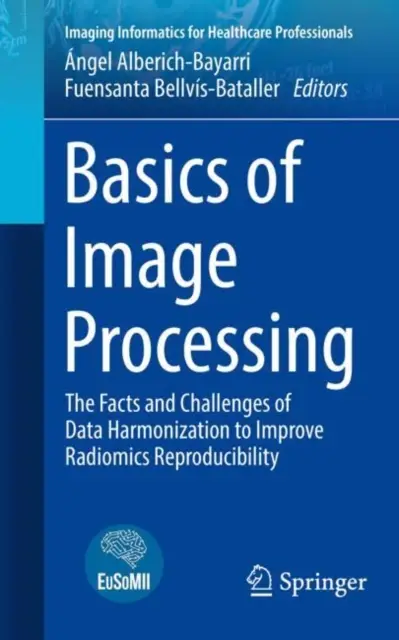
Basics of Image Processing
The Facts and Challenges of Data Harmonization to Improve Radiomics Reproducibility
Price and availability
$87.99
Available in: Andorra, Austria, Australia, Belgium, Bulgaria, Canada, Switzerland, Cyprus, Czechia, Germany, Denmark, Estonia, Spain, Finland, France, United Kingdom, Guernsey, Greece, Croatia, Hungary, Ireland, Isle of Man, Iceland, Italy, Jersey, Japan, Liechtenstein, Lithuania, Luxembourg, Latvia, Monaco, Malta, Netherlands, Norway, Poland, Portugal, Romania, Sweden, Slovenia, Slovakia, San Marino, United States, Vatican City, South Africa
Stores: US, UK, Canada, EU, Australia.
Sign in to buyThe price is re-checked by the server before payment.
For personal use under the eBook licence.
- Format
- EPUB
- DRM
- Not stated by the publisher
- Language
- English
- Publisher
- Springer International Publishing
- Published
- 24 February 2024
- ISBN
- 9783031484469
- Subjects
- Nuclear medicine, Medical imaging, Biomedical engineering, Biology, life sciences, Data mining, Computer modelling & simulation, Expert systems / knowledge-based systems, Nuclear medicine, Medical imaging, Biomedical engineering / Medical engineering, Computational biology / bioinformatics, Data mining, Expert systems / knowledge-based systems
About this book
This book, endorsed by EuSoMII, provides clinicians, researchers and scientists a useful handbook to navigate the intricate landscape of data harmonization, as we embark on a journey to improve the reproducibility, robustness and generalizability of multi-centric real-world data radiomic studies. In these pages, the authors delve into the foundational principles of radiomics and its far-reaching implications for precision medicine. They describe the different methodologies used in extracting quantitative features from medical images, the building blocks that enable the transformation of images into actionable predictions. This book sweeps from understanding the basis of harmonization to the implementation of all the knowledge acquired to date, with the aim of conveying the importance of harmonizing medical data and providing a useful guidance to enable its applicability and the future use of advanced radiomics-based models in routine clinical practice. As authors embark on this exploration of data harmonization in radiomics, they hope to ignite discussions, foster new ideas, and inspire researchers, clinicians, and scientists alike to embrace the challenges and opportunities that lie ahead. Together, they elevate radiomics as a reproducible technology and establish it as an indispensable and actionable tool in the quest for improved cancer diagnosis and treatment.
Bibliographic data © Gardners Books Ltd.