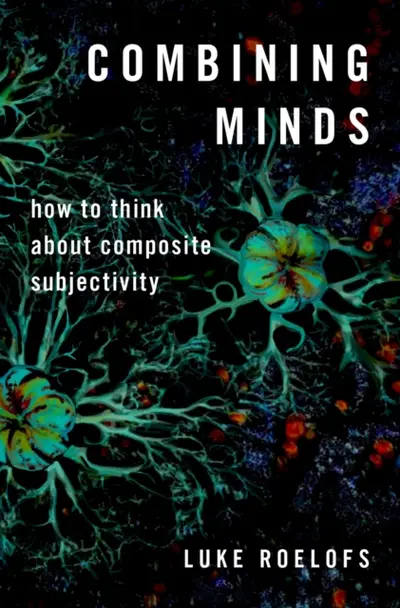
EPUB · English
Combining Minds
How to Think about Composite Subjectivity
Price and availability
$89.99
Available in: Andorra, Austria, Australia, Belgium, Bulgaria, Canada, Switzerland, Cyprus, Czechia, Germany, Denmark, Estonia, Spain, Finland, France, United Kingdom, Guernsey, Greece, Croatia, Hungary, Ireland, Isle of Man, Iceland, Italy, Jersey, Japan, Liechtenstein, Lithuania, Luxembourg, Latvia, Monaco, Malta, Netherlands, Norway, Poland, Portugal, Romania, Sweden, Slovenia, Slovakia, San Marino, United States, Vatican City, South Africa
Stores: US, UK, Canada, EU, Australia.
Sign in to buyThe price is re-checked by the server before payment.
For personal use under the eBook licence.
- Format
- EPUB
- DRM
- Not stated by the publisher
- Language
- English
- Publisher
- Oxford University Press
- Published
- 28 January 2019
- ISBN
- 9780190859077
- Subjects
- Philosophy: metaphysics & ontology, Philosophy of mind, QDTJ, QDTM
About this book
Combining Minds is about the idea of minds built up out of other minds, whether this is possible, and what it would mean if it were. Roelofs surveys many areas of philosophy and psychology, analysing and evaluating denials and affirmations of mental combination that have been made in regard to everything from brain structure, to psychological conflict, to social cooperation. In each case, he carefully distinguishes different senses in which subjectivity might be composite, and different arguments for and against them, concluding that composite subjectivity, in various forms, may be much more common than we think. Combining Minds is also the first book-length defence of constitutive panpsychism against all aspects of the 'combination problem'. Constitutive panpsychism is an increasingly prominent theory, holding that consciousness is naturally inherent in matter, with human consciousness built up out of this basic consciousness the same way human bodies are built up out of physical matter. Such a view requires that many very simple conscious minds can compose a single very complex one, and a major objection made against constitutive panpsychism is that they cannot - that minds simply do not combine. This is the combination problem, which Roelofs scrutinizes, dissects, and refutes. It reflects not only contemporary debates but a long philosophical tradition of contrasting the apparently indivisible unity of the mind with the deep and pervasive divisibility of the material world. Combining Minds draws together the threads of this problem and develops a powerful and flexible response to it.
Bibliographic data © Gardners Books Ltd.