PDF · English
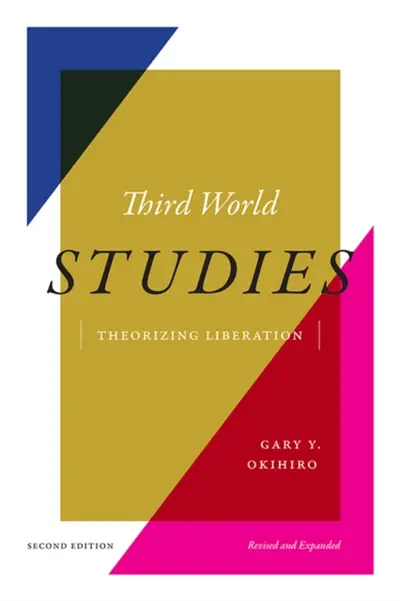
Third World Studies
Theorizing Liberation
Price and availability
$39.99
Available in: Andorra, Austria, Australia, Belgium, Bulgaria, Canada, Switzerland, Cyprus, Czechia, Germany, Denmark, Estonia, Spain, Finland, France, United Kingdom, Guernsey, Greece, Croatia, Hungary, Ireland, Isle of Man, Iceland, Italy, Jersey, Japan, Liechtenstein, Lithuania, Luxembourg, Latvia, Monaco, Malta, Netherlands, Norway, Poland, Portugal, Romania, Sweden, Slovenia, Slovakia, San Marino, United States, Vatican City, South Africa
Stores: US, UK, Canada, EU, Australia.
Sign in to buyThe price is re-checked by the server before payment.
For personal use under the eBook licence.
- Format
- DRM
- Not stated by the publisher
- Language
- English
- Publisher
- Duke University Press
- Published
- 19 July 2024
- ISBN
- 9781478059653
- Subjects
- Developing countries, General & world history, Social & cultural history, Colonialism & imperialism, Ethnic studies, Ethnic minorities & multicultural studies, Politics & government, Global South / Developing countries, JBSL, JBSL1, Politics and government, NHB, NHTB, NHTQ
About this book
In this revised and expanded second edition of Third World Studies, Gary Y. Okihiro considers the methods and theories that might constitute the formation of Third World studies. Proposed in 1968 at San Francisco State College by the Third World Liberation Front but replaced by faculty and administrators with ethnic studies, Third World studies was over before it began. As opposed to ethnic studies, which Okihiro critiques for its liberalism and US-centrism, Third World studies begins with the colonized world and the anti-imperial, anticolonial, and antiracist projects located therein as described by W. E. B. Du Bois in 1900. Third World studies analyzes the locations and articulations of power around the axes of race, gender, sexuality, (dis)ability, class, and nation. In this new edition, Okihiro emphasizes the work of Third World intellectuals such as M. N. Roy, Jose Carlos Mariategui, and Oliver Cromwell Cox; foregrounds the importance of Bandung and the Tricontinental; and adds discussions of eugenics, feminist epistemologies, and religion. With this work, Okihiro establishes Third World studies as a theoretical formation and a liberatory practice.
Bibliographic data © Gardners Books Ltd.