EPUB · English
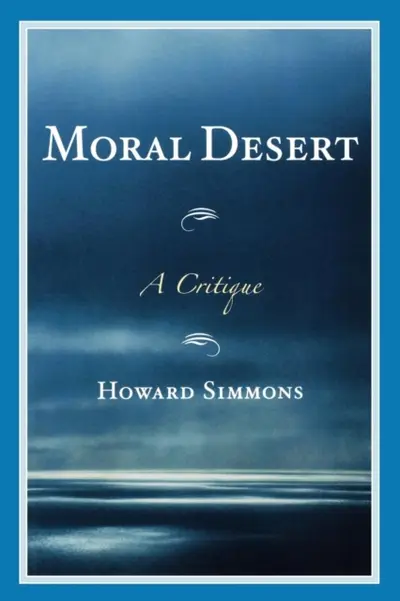
Moral Desert
A Critique
Price and availability
$43.99
Available in: Andorra, Austria, Australia, Belgium, Bulgaria, Canada, Switzerland, Cyprus, Czechia, Germany, Denmark, Estonia, Spain, Finland, France, United Kingdom, Guernsey, Greece, Croatia, Hungary, Ireland, Isle of Man, Iceland, Italy, Jersey, Japan, Liechtenstein, Lithuania, Luxembourg, Latvia, Monaco, Malta, Netherlands, Norway, Poland, Portugal, Romania, Sweden, Slovenia, Slovakia, San Marino, United States, Vatican City, South Africa
Stores: US, UK, Canada, EU, Australia.
Sign in to buyThe price is re-checked by the server before payment.
For personal use under the eBook licence.
- Format
- EPUB
- DRM
- Not stated by the publisher
- Language
- English
- Publisher
- Bloomsbury Publishing (USA)
- Published
- 23 February 2010
- Pages
- 162
- ISBN
- 9780761850953
- Subjects
- Ethics & moral philosophy, Central government policies, Legal skills & practice, Judicial powers, Central / national / federal government policies, Legal skills and practice, Legal systems: judges and judicial powers, QDTQ
About this book
In Moral Desert, Howard Simmons notes that the idea that we deserve to be praised or rewarded for good behavior and blamed or punished when we act badly seems central to everyone's moral deliberation and practices. Simmons subjects this assumption to critical scrutiny. He argues that in a wide range of cases it is almost impossible to know the extent of people's moral responsibility, and indeed that it may be a complete delusion. He attacks the still-popular theory of retributive punishment, with special reference to the views of Peter French and J. Angelo Corlett. Simmons does not conclude that punishment is always unjustified, but insists that any justification should relate to its real world consequences. State punishment should be inflicted according to strict consequentialist precepts, and the author provides systematic principles for determining an appropriate sentence and for deciding when offenders should be excused. He also considers the implications of his views for distributive justice and personal morality.
Bibliographic data © Gardners Books Ltd.