PDF · English
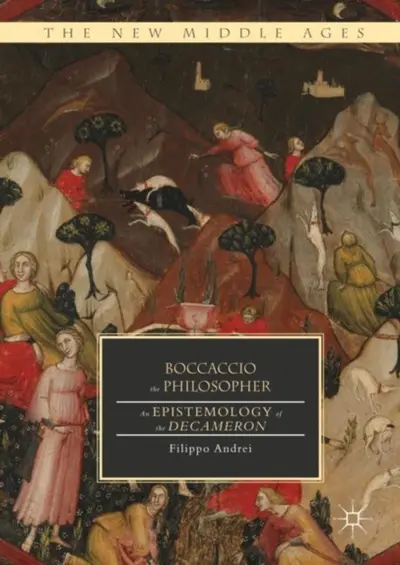
Boccaccio the Philosopher
An Epistemology of the Decameron
Price and availability
$100.99
Available in: Andorra, Austria, Australia, Belgium, Bulgaria, Canada, Switzerland, Cyprus, Czechia, Germany, Denmark, Estonia, Spain, Finland, France, United Kingdom, Guernsey, Greece, Croatia, Hungary, Ireland, Isle of Man, Iceland, Italy, Jersey, Japan, Liechtenstein, Lithuania, Luxembourg, Latvia, Monaco, Malta, Netherlands, Norway, Poland, Portugal, Romania, Sweden, Slovenia, Slovakia, San Marino, United States, Vatican City, South Africa
Stores: US, UK, Canada, EU, Australia.
Sign in to buyThe price is re-checked by the server before payment.
For personal use under the eBook licence.
- Format
- DRM
- Not stated by the publisher
- Language
- English
- Publisher
- Springer International Publishing
- Published
- 7 October 2017
- ISBN
- 9783319651156
- Subjects
- Europe, Italian, Literary studies: general, Literary studies: classical, early & medieval, Western philosophy: Medieval & Renaissance, c 500 to c 1600, Philosophy: epistemology & theory of knowledge, Europe, Literature: history and criticism, Literary studies: ancient, classical and medieval, Medieval Western philosophy, Philosophy: epistemology and theory of knowledge
About this book
This book explores the tangled relationship between literary production and epistemological foundation as exemplified in one of the masterpieces of Italian literature. Filippo Andrei argues that Giovanni Boccaccio's Decameron has a significant though concealed engagement with philosophy, and that the philosophical implications of its narratives can be understood through an epistemological approach to the text. He analyzes the influence of Dante, Petrarch, Thomas Aquinas, Aristotle, and other classical and medieval thinkers on Boccaccio's attitudes towards ethics and knowledge-seeking. Beyond providing an epistemological reading of the Decameron, this book also evaluates how a theoretical reflection on the nature of rhetoric and poetic imagination can ultimately elicit a theory of knowledge.
Bibliographic data © Gardners Books Ltd.