PDF · English
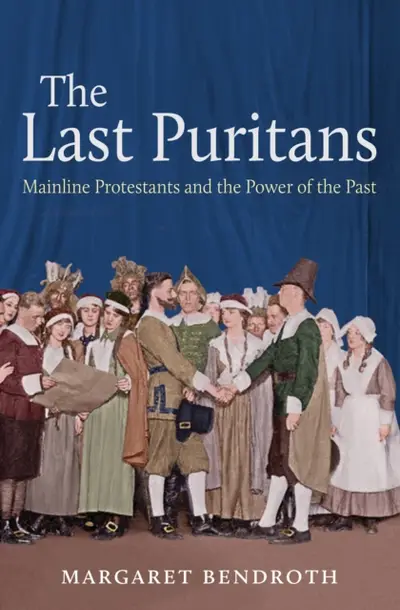
Last Puritans
Mainline Protestants and the Power of the Past
Price and availability
$27.99
Available in: Andorra, Austria, Australia, Belgium, Bulgaria, Canada, Switzerland, Cyprus, Czechia, Germany, Denmark, Estonia, Spain, Finland, France, United Kingdom, Guernsey, Greece, Croatia, Hungary, Ireland, Isle of Man, Iceland, Italy, Jersey, Japan, Liechtenstein, Lithuania, Luxembourg, Latvia, Monaco, Malta, Netherlands, Norway, Poland, Portugal, Romania, Sweden, Slovenia, Slovakia, San Marino, United States, Vatican City, South Africa
Stores: US, UK, Canada, EU, Australia.
Sign in to buyThe price is re-checked by the server before payment.
For personal use under the eBook licence.
- Format
- DRM
- Not stated by the publisher
- Language
- English
- Publisher
- The University of North Carolina Press
- Published
- 12 August 2015
- ISBN
- 9798890849045
- Subjects
- USA, History of the Americas, History of religion, Protestantism & Protestant Churches, Calvinist, Reformed & Presbyterian Churches, United States of America, USA, History of the Americas, Calvinist, Reformed and Presbyterian Churches
About this book
Congregationalists, the oldest group of American Protestants, are the heirs of New Englands first founders. While they were key characters in the story of early American history, from Plymouth Rock and the founding of Harvard and Yale to the Revolutionary War, their luster and numbers have faded. But Margaret Bendroths critical history of Congregationalism over the past two centuries reveals how the denomination is essential for understanding mainline Protestantism in the making.Bendroth chronicles how the New England Puritans, known for their moral and doctrinal rigor, came to be the antecedents of the United Church of Christ, one of the most liberal of all Protestant denominations today. The demands of competition in the American religious marketplace spurred Congregationalists, Bendroth argues, to face their distinctive history. By engaging deeply with their denominations storied past, they recast their modern identity. The soul-searching took diverse forms from letter writing and eloquent sermonizing to Pilgrim-celebrating Thanksgiving pageants as Congregationalists renegotiated old obligations to their seventeenth-century spiritual ancestors. The result was a modern piety that stood a respectful but ironic distance from the past and made a crucial contribution to the American ethos of religious tolerance.
Bibliographic data © Gardners Books Ltd.