EPUB · English
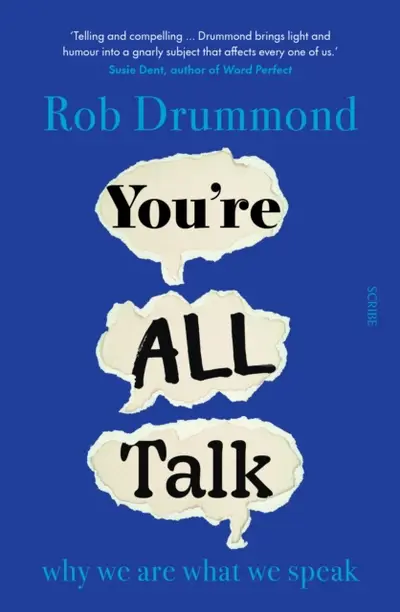
You're All Talk
why we are what we speak
Price and availability
Not sold in this region
Available in: Austria, Australia, Belgium, Bulgaria, Switzerland, Cyprus, Czechia, Germany, Denmark, Estonia, Spain, Finland, France, United Kingdom, Greece, Croatia, Hungary, Ireland, Isle of Man, Iceland, Italy, Jersey, Liechtenstein, Lithuania, Luxembourg, Latvia, Malta, Netherlands, Norway, Poland, Portugal, Romania, Sweden, Slovenia, Slovakia, South Africa
Stores: UK, EU, Australia. Not available in the United States store.
This title cannot be bought in this store yet: its supplier terms, territorial rights or price are still being confirmed.
For personal use under the eBook licence.
- Format
- EPUB
- DRM
- Not stated by the publisher
- Language
- English
- Publisher
- Scribe Publications Pty Ltd
- Published
- 12 October 2023
- Pages
- 256
- ISBN
- 9781761385285
- Subjects
- Language: history & general works, linguistics, Philosophy of language, Sociolinguistics, Communication studies, Social interaction, Sociology, Language: history and general works, Linguistics, Philosophy of language, Sociolinguistics, Psycholinguistics and cognitive linguistics, Communication studies, Sociology
About this book
Why do we have different accents and where do they come from? Why do you say 'tomayto' and I say 'tomahto'? And is one way of speaking better than another?In You re All Talk, linguist Rob Drummond explores the enormous diversity of our spoken language to reveal extraordinary insights into how humans operate: how we perceive (and judge) other people and how we would like ourselves to be perceived. He investigates how and why we automatically associate different accents with particular social characteristics degrees of friendliness, authority, social class, level of education, race, and so on and how we, consciously or subconsciously, change the way we speak in order to create different versions of ourselves to fit different environments.Ultimately, You re All Talk demonstrates the beauty of linguistic diversity and how embracing it can give us a better understanding of other people and ourselves.
Bibliographic data © Gardners Books Ltd.