PDF · English
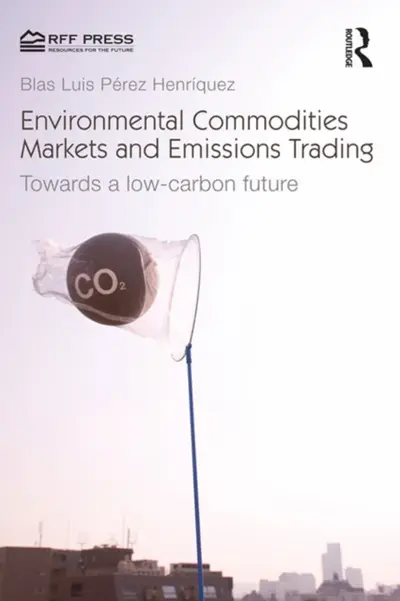
Environmental Commodities Markets and Emissions Trading
Towards a Low-Carbon Future
Price and availability
$75.99
Available in: Andorra, Austria, Australia, Belgium, Bulgaria, Canada, Switzerland, Cyprus, Czechia, Germany, Denmark, Estonia, Spain, Finland, France, United Kingdom, Guernsey, Greece, Croatia, Hungary, Ireland, Isle of Man, Iceland, Italy, Jersey, Japan, Liechtenstein, Lithuania, Luxembourg, Latvia, Monaco, Malta, Netherlands, Norway, Poland, Portugal, Romania, Sweden, Slovenia, Slovakia, San Marino, United States, Vatican City, South Africa
Stores: US, UK, Canada, EU, Australia.
Sign in to buyThe price is re-checked by the server before payment.
For personal use under the eBook licence.
- Format
- DRM
- Not stated by the publisher
- Language
- English
- Publisher
- Taylor & Francis
- Published
- 5 March 2013
- ISBN
- 9781136521799
- Subjects
- Central government policies, Environmental economics, Pollution & threats to the environment, United States of America, USA, EU (European Union), Environmental economics, Climate change
About this book
Market-based solutions to environmental problems offer great promise, but require complex public policies that take into account the many institutional factors necessary for the market to work and that guard against the social forces that can derail good public policies. Using insights about markets from the new institutional economics, this book sheds light on the institutional history of the emissions trading concept as it has evolved across different contexts. It makes accessible the policy design and practical implementation aspects of a key tool for fighting climate change: emissions trading systems (ETS) for environmental control. Blas Luis Perez Henriquez analyzes past market-based environmental programs to extract lessons for the future of ETS. He follows the development of the emissions trading concept as it evolved in the United States and was later applied in the multinational European Emissions Trading System and in sub-national programs in the United States such as the Regional Greenhouse Gas Initiative (RGGI) and California's ETS. This ex-post evaluation of an ETS as it evolves in real time in the real world provides a valuable supplement to what is already known from theoretical arguments and simulation studies about the advantages and disadvantages of the market strategy. Political cycles and political debate over the use of markets for environmental control make any form of climate policy extremely contentious. Perez Henriquez argues that, despite ideological disagreements, the ETS approach, or, more popularly, 'cap-and-trade' policy design, remains the best hope for a cost-effective policy to reduce GHG emissions around the world.
Bibliographic data © Gardners Books Ltd.