EPUB · English
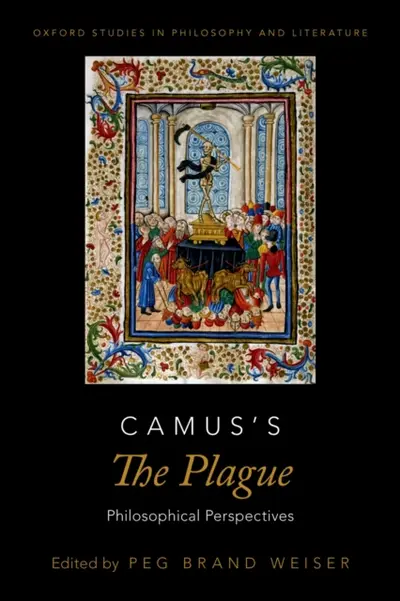
Camus's The Plague
Philosophical Perspectives
Price and availability
$18.99
Available in: Andorra, Austria, Australia, Belgium, Bulgaria, Canada, Switzerland, Cyprus, Czechia, Germany, Denmark, Estonia, Spain, Finland, France, United Kingdom, Guernsey, Greece, Croatia, Hungary, Ireland, Isle of Man, Iceland, Italy, Jersey, Japan, Liechtenstein, Lithuania, Luxembourg, Latvia, Monaco, Malta, Netherlands, Norway, Poland, Portugal, Romania, Sweden, Slovenia, Slovakia, San Marino, United States, Vatican City, South Africa
Stores: US, UK, Canada, EU, Australia.
Sign in to buyThe price is re-checked by the server before payment.
For personal use under the eBook licence.
- Format
- EPUB
- DRM
- Not stated by the publisher
- Language
- English
- Publisher
- Oxford University Press
- Published
- 17 January 2023
- ISBN
- 9780197599358
- Subjects
- Philosophy of language, Literary studies: general, Philosophy, History of ideas, Philosophy of language, Literary studies: general, JBCC9, QD
About this book
La Peste (in English The Plague), originally published in 1947 by the Nobel Prize-winning writer Albert Camus, chronicles the progression of deadly bubonic plague as it spreads through the quarantined Algerian city of Oran. While most discussions of fictional examples within aesthetics are either historical or hypothetical, Camus offers an example of "e;pestilence fiction."e; Camus chose fiction to convey facts--about plagues in the past, his own bout with tuberculosis at age seventeen, living under quarantine away from home for several years, and forced separation from his wife who remained in Algiers while he was abroad in Nazi-occupied France. His own lived experiences undergird an imaginative account of shared human realities with which we can identify: vulnerability to the disease, isolation, fear, and finally humanitarianism. The Plague teaches us to neither covet nor expect what we so casually took for granted. This collection of original essays on philosophical themes in The Plague is of special relevance during and in the aftermath of Covid-19 but also provides reflections that will be of lasting value to those interested in this classic work of literature. The novel explores questions of enduring importance. Do we collectively meet the threshold of ethical behaviour posed by Camus who wrote, What's true of all the evils in the world is true of plague as well. It helps men to rise above themselves ? Or does the absurd undermine the compassionate? Do heroes dutifully fight a plague with common decency, or does human nature resign itself to the normalization of uncontrollable suffering and death? There are myriad ways to approach the novel and this volume encourages readers to ponder human dilemmas in fictional Oran informed by our current pandemic.
Bibliographic data © Gardners Books Ltd.