EPUB · English
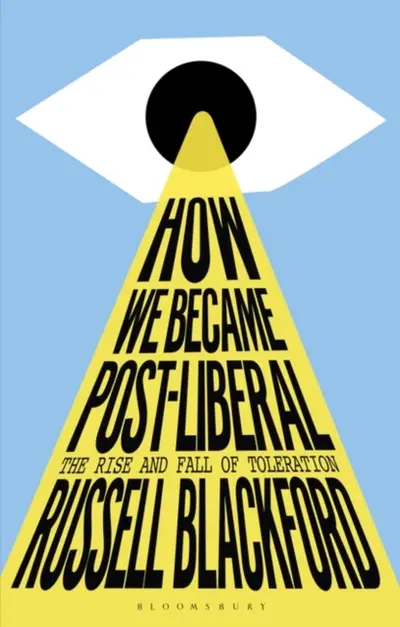
How We Became Post-Liberal
The Rise and Fall of Toleration
Price and availability
$25.99
Available in: Andorra, Austria, Australia, Belgium, Bulgaria, Canada, Switzerland, Cyprus, Czechia, Germany, Denmark, Estonia, Spain, Finland, France, United Kingdom, Guernsey, Greece, Croatia, Hungary, Ireland, Isle of Man, Iceland, Italy, Jersey, Japan, Liechtenstein, Lithuania, Luxembourg, Latvia, Monaco, Malta, Netherlands, Norway, Poland, Portugal, Romania, Sweden, Slovenia, Slovakia, San Marino, United States, Vatican City, South Africa
Stores: US, UK, Canada, EU, Australia.
Sign in to buyThe price is re-checked by the server before payment.
For personal use under the eBook licence.
- Format
- EPUB
- DRM
- Not stated by the publisher
- Language
- English
- Publisher
- Bloomsbury Publishing
- Published
- 19 October 2023
- Pages
- 272
- ISBN
- 9781350322967
- Subjects
- Social & political philosophy, Political science & theory, Liberalism & centre democratic ideologies, Political science and theory, Centrist democratic ideologies and movements, QDTS
About this book
Liberalism is in trouble. As a set of ideas, it has lost much of its historical authority in guiding public policy and personal behaviour. In this post-liberal climate, Russell Blackford asks whether liberalism is truly over. How We Became Post-Liberal examines how Western liberal democracies became nations where traditional liberal principles of toleration (religious and otherwise), individual liberty and freedom of speech are frequently dismissed as outdated or twisted to support conservative policies. Blackford traces the lineage of liberalism from problems of toleration that emerged when Christianity triumphed in the late centuries of classical antiquity, with comparison to non-Western civilizations. The political and philosophical story culminates in the recent development over the past 30 to 50 years of post-liberal ideologies in the West. At each stage, Blackford discusses arguments for and against liberal principles, identifying why no argument to date has been totally successful in convincing opponents, while maintaining that liberalism's ideas and language are still worth saving. From campus wars over academic freedom to the Charlie Hebdo attack and the murder of Samuel Paty, this is an indispensable guide for anyone wanting to understand the why, what and how of the post-liberal world.
Bibliographic data © Gardners Books Ltd.