EPUB · English
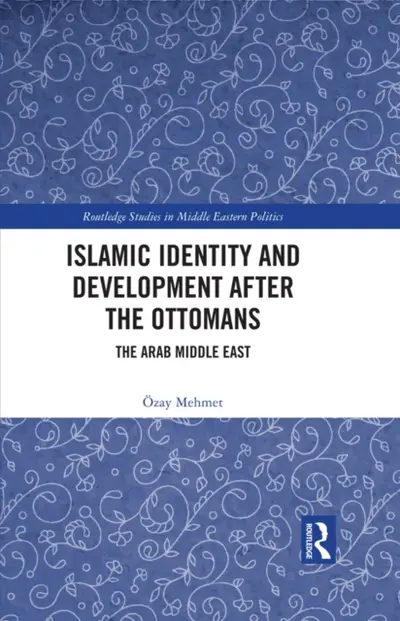
Islamic Identity and Development after the Ottomans
The Arab Middle East
Price and availability
$55.99
Available in: Andorra, Austria, Australia, Belgium, Bulgaria, Canada, Switzerland, Cyprus, Czechia, Germany, Denmark, Estonia, Spain, Finland, France, United Kingdom, Guernsey, Greece, Croatia, Hungary, Ireland, Isle of Man, Iceland, Italy, Jersey, Japan, Liechtenstein, Lithuania, Luxembourg, Latvia, Monaco, Malta, Netherlands, Norway, Poland, Portugal, Romania, Sweden, Slovenia, Slovakia, San Marino, United States, Vatican City, South Africa
Stores: US, UK, Canada, EU, Australia.
Sign in to buyThe price is re-checked by the server before payment.
For personal use under the eBook licence.
- Format
- EPUB
- DRM
- Not stated by the publisher
- Language
- English
- Publisher
- Taylor & Francis
- Published
- 31 March 2023
- ISBN
- 9781000750089
- Subjects
- Middle East, Religion: general, Politics & government, Middle East, Geopolitics, Development economics and emerging economies, Middle Eastern history
About this book
Exploring themes of identity and development in the post-Ottoman Arab world, this book updates the author's earlier Islamic Identity and Development (Routledge, 1990) to analyse the root causes of chaos, civil war, and conflict in the Islamic Core today.Adopting a neo-Ottomanist framework, and using the latest scholarship on the Middle East, the author traces the historical development of the current crisis to the First World War, when the West instigated invasions, coup d'etats, civil and proxy wars. It is argued that Western powers have facilitated the dispossession of the Arab people in their overarching aim to gain control of the oil fields. A range of historical case-studies are provided as evidence, from the Balfour Declaration and the Sykes-Picot Agreement to the creation of Israel and the displacement of Islamic refugees. Individual nations are also analysed, including Iran, Saudi Arabia, Iraq, Syria, Libya, and Egypt. Ultimately, the author suggests that artificial countries and unsustainable frontiers are the root causes of the Islamic crisis. However, a realistic (and long-term) solution may lie in the evolution of a new Silk Route Economy.This book will appeal to graduate-level students in political economy, area studies, international affairs, and Middle East studies generally.
Bibliographic data © Gardners Books Ltd.