EPUB · English
Space Ecology
From Earth to Moon and Mars
Price and availability
$33.99
Available in: Andorra, Austria, Australia, Belgium, Bulgaria, Canada, Switzerland, Cyprus, Czechia, Germany, Denmark, Estonia, Spain, Finland, France, United Kingdom, Guernsey, Greece, Croatia, Hungary, Ireland, Isle of Man, Iceland, Italy, Jersey, Japan, Liechtenstein, Lithuania, Luxembourg, Latvia, Monaco, Malta, Netherlands, Norway, Poland, Portugal, Romania, Sweden, Slovenia, Slovakia, San Marino, United States, Vatican City, South Africa
Stores: US, UK, Canada, EU, Australia.
Sign in to buyThe price is re-checked by the server before payment.
For personal use under the eBook licence.
- Format
- EPUB
- DRM
- Not stated by the publisher
- Language
- English
- Publisher
- Springer Nature Switzerland
- Published
- 18 March 2025
- ISBN
- 9783031783449
- Subjects
- International law, Public international law, Astronomy, space & time, Astrophysics, Ecological science, the Biosphere, Public international law, Astronomy, space and time, Ecological science, the Biosphere
About this book
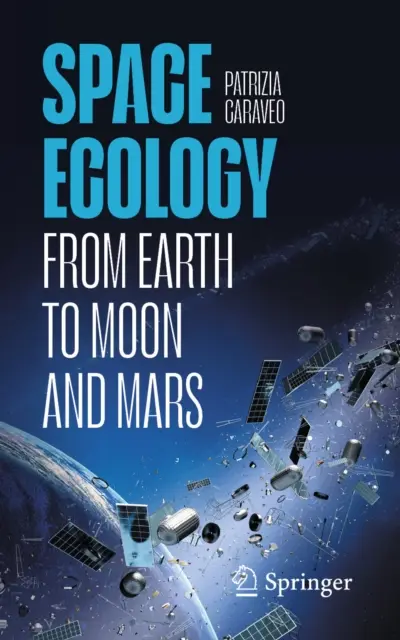
The recent entry of private entrepreneurs into the world of space has multiplied the number of services provided by instruments in orbit, resulting into a rapid and tumultuous growth of the space economy. More services translate into more launches bringing into orbit more satellites. As a result, circum-terrestrial orbits are filling up alarmingly, and we are only at the beginning of the proliferation of mega constellations that have sprung up in recent years to provide planet-wide Internet connectivity. There are neither national nor international laws for managing the number of orbiting satellites that are growing at such a dizzying rate that real orbital traffic jams are feared. We need to extend to the space around us, but also to the other bodies in the solar system, the concept of sustainable use so as not to repeat the same mistakes we have made on Earth's surface. Around our planet we need to avoid overcrowding of orbits so as not to endanger our planet's economy, which is heavily dependent on the use of satellites. Looking further afield, to the Moon and Mars, for example, we must balance resource utilization with unnecessary pollution of fragile ecosystems. Human settlements will have to respect the ecosystem of these celestial bodies that do not belong to any state but must be absolutely protected in order to prevent an interplanetary version of the tragedy of the commons, unfortunately so familiar in our planet. Particular attention must be paid to the risks of biological pollution. Explorers (both human and robotic) risk carrying terrestrial material. Similarly, handling extraterrestrial samples requires well-equipped laboratories and continuous surveillance.
Bibliographic data © Gardners Books Ltd.