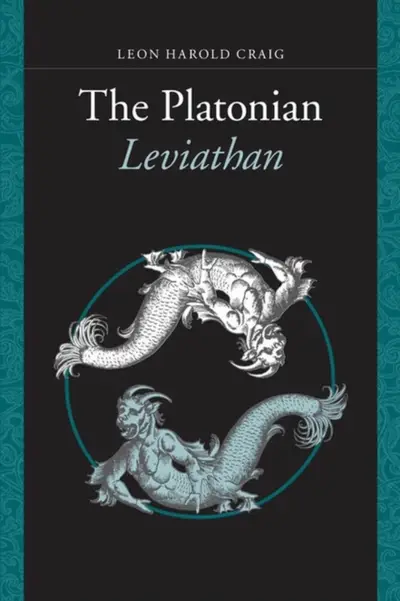
PDF · English
Platonian Leviathan
Price and availability
$52.99
Available in: Andorra, Austria, Australia, Belgium, Bulgaria, Canada, Switzerland, Cyprus, Czechia, Germany, Denmark, Estonia, Spain, Finland, France, United Kingdom, Guernsey, Greece, Croatia, Hungary, Ireland, Isle of Man, Iceland, Italy, Jersey, Japan, Liechtenstein, Lithuania, Luxembourg, Latvia, Monaco, Malta, Netherlands, Norway, Poland, Portugal, Romania, Sweden, Slovenia, Slovakia, San Marino, United States, Vatican City, South Africa
Stores: US, UK, Canada, EU, Australia.
Sign in to buyThe price is re-checked by the server before payment.
For personal use under the eBook licence.
- Format
- DRM
- Not stated by the publisher
- Language
- English
- Publisher
- University of Toronto Press
- Published
- 30 January 2010
- Pages
- 704
- ISBN
- 9781442686496
- Subjects
- Literary studies: general, Modern & contemporary fiction (post c 1945), Literary studies: general, FBA
About this book
Thomas Hobbes's influential political treatise, Leviathan, was first published in 1651. Many scholars have since credited him with a mechanistic outlook towards human nature that established the basis of modern Western political philosophy from the perspective of social contract theory. In The Platonian Leviathan, Leon Harold Craig weaves together philosophy, political science, and literature to offer a radical re-interpretation of Hobbes's most famous work.Though Craig begins and concludes his analysis with discussions of Herman Melville's Moby-Dick and includes an essay on Joseph Conrad's Heart of Darkness, the bulk of his two-part commentary centres on Leviathan. Part One shows the overt principles of Hobbes's political prescription to be untenable, and strongly suggests that Hobbes himself did not subscribe to these rules, using them only as tools to further his philosophical goals. In Part Two, Craig displays the underlying Platonism of Hobbes's thinking. Sure to be controversial, The Platonian Leviathan may nonetheless re-orient the future direction of Hobbes scholarship.
Bibliographic data © Gardners Books Ltd.