EPUB · English
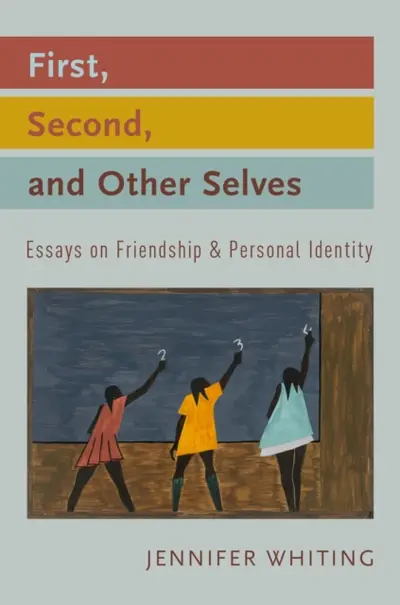
First, Second, and Other Selves
Essays on Friendship and Personal Identity
Price and availability
$101.99
Available in: Andorra, Austria, Australia, Belgium, Bulgaria, Canada, Switzerland, Cyprus, Czechia, Germany, Denmark, Estonia, Spain, Finland, France, United Kingdom, Guernsey, Greece, Croatia, Hungary, Ireland, Isle of Man, Iceland, Italy, Jersey, Japan, Liechtenstein, Lithuania, Luxembourg, Latvia, Monaco, Malta, Netherlands, Norway, Poland, Portugal, Romania, Sweden, Slovenia, Slovakia, San Marino, United States, Vatican City, South Africa
Stores: US, UK, Canada, EU, Australia.
Sign in to buyThe price is re-checked by the server before payment.
For personal use under the eBook licence.
- Format
- EPUB
- DRM
- Not stated by the publisher
- Language
- English
- Publisher
- Oxford University Press
- Published
- 2 May 2016
- ISBN
- 9780190631710
- Subjects
- Western philosophy: Ancient, to c 500, Ethics & moral philosophy, Social, group or collective psychology, Social, group or collective psychology, QDHA, QDTQ
About this book
In her essay collection First, Second, and Other Selves: Essays on Friendship and Personal Identity, well-known scholar of ancient philosophy Jennifer Whiting gathers her previously published essays taking Aristotle's theories on friendship as a springboard to engage with contemporary philosophical work on personal identity and moral psychology. Whiting examines three themes throughout the collection, the first being psychic contingency, or the belief that the psychological structures characteristic of human beings may in fact vary, not just from one cultural (or socio-historical) context to another, but also from one individual to another. The second theme is the belief that friendship informs an understanding of the nature of the self, an idea that springs from Whiting's uncommon reading of Aristotle's writings on friendship. Specifically, Whiting explains a scenario in which a "e;virtuous agent"e; adopts a kind of impersonal attitude both towards herself and towards her "e;character"e; friends, loving both because they are virtuous; this scenario ties in with an examination of the Aristotelian concept of the ideal friend as an "e;other self,"e; or a friendship that evolves from character rather than ego, as well as Whiting's meditation on whether or not a virtuous individual should have a "e;special"e; sort of concern for her own future self, distinct in kind from the concern that she has for others. The third theme is that of rational egoism, a concept that Whiting critiques, especially in the context of Aristotle's eudaimonism. The central tenet of the collection is the message that taking "e;ethocentric"e; (or character-based) attitudes both towards ourselves and towards our friends sheds light on the nature of personal identity and helps to combat ethnocentric and other objectionable forms of bias, a message that is becoming increasingly urgent in light of the recent deaths of Trayvon Martin and Michael Brown.
Bibliographic data © Gardners Books Ltd.