PDF · English
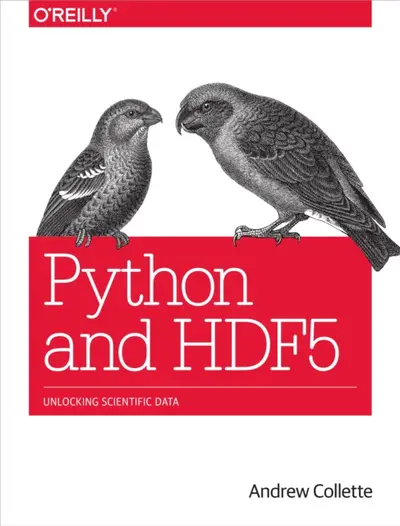
Python and HDF5
Unlocking Scientific Data
Price and availability
$22.99
Available in: Andorra, Austria, Australia, Belgium, Bulgaria, Canada, Switzerland, Cyprus, Czechia, Germany, Denmark, Estonia, Spain, Finland, France, United Kingdom, Guernsey, Greece, Croatia, Hungary, Ireland, Isle of Man, Iceland, Italy, Jersey, Japan, Liechtenstein, Lithuania, Luxembourg, Latvia, Monaco, Malta, Netherlands, Norway, Poland, Portugal, Romania, Sweden, Slovenia, Slovakia, San Marino, United States, Vatican City, South Africa
Stores: US, UK, Canada, EU, Australia.
Sign in to buyThe price is re-checked by the server before payment.
For personal use under the eBook licence.
- Format
- DRM
- Not stated by the publisher
- Language
- English
- Publisher
- O'Reilly Media
- Published
- 21 October 2013
- ISBN
- 9781491945018
- Subjects
- Information technology: general issues, Computer programming / software development, Web programming, Programming & scripting languages: general, Databases, Digital and Information technology: general topics, Computer programming / software engineering, Web programming, Programming and scripting languages: general, Databases / Data management
About this book
Gain hands-on experience with HDF5 for storing scientific data in Python. This practical guide quickly gets you up to speed on the details, best practices, and pitfalls of using HDF5 to archive and share numerical datasets ranging in size from gigabytes to terabytes.Through real-world examples and practical exercises, youll explore topics such as scientific datasets, hierarchically organized groups, user-defined metadata, and interoperable files. Examples are applicable for users of both Python 2 and Python 3. If youre familiar with the basics of Python data analysis, this is an ideal introduction to HDF5.Get set up with HDF5 tools and create your first HDF5 fileWork with datasets by learning the HDF5 Dataset objectUnderstand advanced features like dataset chunking and compressionLearn how to work with HDF5s hierarchical structure, using groupsCreate self-describing files by adding metadata with HDF5 attributesTake advantage of HDF5s type system to create interoperable filesExpress relationships among data with references, named types, and dimension scalesDiscover how Python mechanisms for writing parallel code interact with HDF5
Bibliographic data © Gardners Books Ltd.