EPUB · Arabic
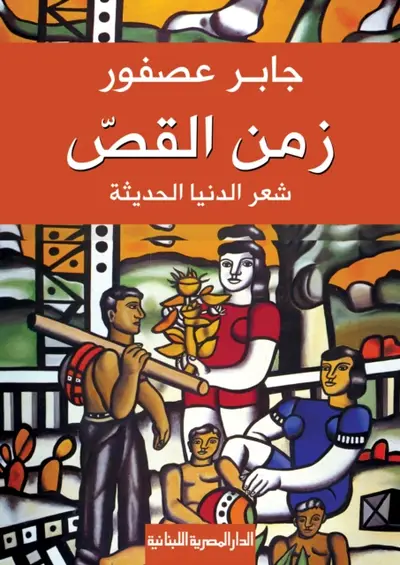
Cutting time
Price and availability
$6.99
Available in: Andorra, Austria, Australia, Belgium, Bulgaria, Canada, Switzerland, Cyprus, Czechia, Germany, Denmark, Estonia, Spain, Finland, France, United Kingdom, Guernsey, Greece, Croatia, Hungary, Ireland, Isle of Man, Iceland, Italy, Jersey, Japan, Liechtenstein, Lithuania, Luxembourg, Latvia, Monaco, Malta, Netherlands, Norway, Poland, Portugal, Romania, Sweden, Slovenia, Slovakia, San Marino, United States, Vatican City, South Africa
Stores: US, UK, Canada, EU, Australia.
Sign in to buyThe price is re-checked by the server before payment.
For personal use under the eBook licence.
- Format
- EPUB
- DRM
- Not stated by the publisher
- Language
- Arabic
- Publisher
- Arabookverse International FZC
- Published
- 1 October 2024
- ISBN
- 9789777952101
- Subjects
- Modern & contemporary fiction (post c 1945), Fiction: literary and general non-genre
About this book
"The truth is that the discussions raised by "The Time of the Novel" and my responses to it, and continuing to establish the connotations of the meanings and connotations of this time that made me replace "The Time of the Novel" with the time of storytelling, and to associate the new title with Naguib Mahfouz's sentence that describes storytelling, or the art of the story. In general, he felt the modern world, as stated in his defense of the art that he loved, and to which he devoted his entire life. The modern world rewarded him with the Nobel Prize, and I think that I presented in the new edition of my book "The New" a different explanation of the origin and development of this art at the same time I am not with the school that believes that we imported the art of storytelling from the West completely, or that the novel "Zainab" in 1913 is the first novel in modern Arabic literature. I am one of those who believe that the art of storytelling was established in Arabic literature as a result of two factors: an internal factor related to In the traditions of Arabic storytelling and its various narrative types, starting with historical narrative, and not ending with philosophical and mystical symbolic storytelling, not to mention epics or popular biographies. If we deny the existence of this factor, we will be lied to by the masterpieces of stories recognized throughout the world, such as "One Thousand and One Nights" or something similar in effect. The second factor is the external factor that is related to the European novel, its traditions, and its transformations at the same time. I believe that this view combines authenticity and modernity in a systematic formulation that does not deny the greatness of its narrative vision and the fascination of the entire world with it, just as it does not deny the long and continuous interaction between the inherited and the new in history and in history, in a way that leads to integration in the two perspectives between the art of storytelling, the signs of which appeared in The middle of the nineteenth century, or in parallel work, and over the years this type of storytelling developed until it rose to prominence at the hands of Muhammad Hussein Heikal and his generation, who reproduced the Western European model, in the context of the rise of national consciousness, of which the 1919 revolution was one of its explosions!
Bibliographic data © Gardners Books Ltd.