EPUB · English
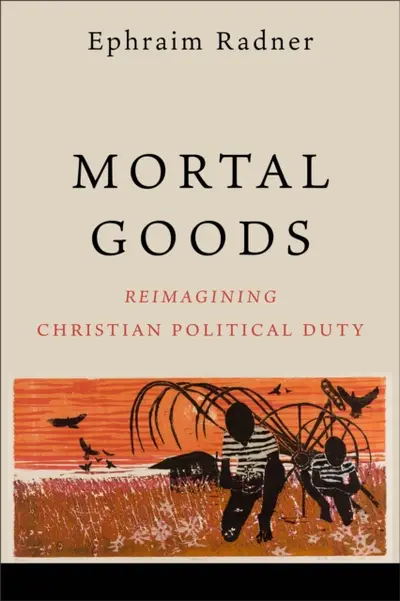
Mortal Goods
Reimagining Christian Political Duty
Price and availability
$43.99
Available in: Andorra, Austria, Australia, Belgium, Bulgaria, Canada, Switzerland, Cyprus, Czechia, Germany, Denmark, Estonia, Spain, Finland, France, United Kingdom, Guernsey, Greece, Croatia, Hungary, Ireland, Isle of Man, Iceland, Italy, Jersey, Japan, Liechtenstein, Lithuania, Luxembourg, Latvia, Monaco, Malta, Netherlands, Norway, Poland, Portugal, Romania, Sweden, Slovenia, Slovakia, San Marino, United States, Vatican City, South Africa
Stores: US, UK, Canada, EU, Australia.
Sign in to buyThe price is re-checked by the server before payment.
For personal use under the eBook licence.
- Format
- EPUB
- DRM
- Not stated by the publisher
- Language
- English
- Publisher
- Baker Publishing Group
- Published
- 19 March 2024
- Pages
- 280
- ISBN
- 9781493444618
- Subjects
- Religion & politics, Christianity, Christian theology, QRAM2, QRM
About this book
This book by one of today's leading theologians examines how Christians might more faithfully and realistically imagine their political vocation.Ephraim Radner explains that our Christian calling is to limit our political concerns to the boundaries of our created lives: our birth, parents, siblings, families, brief persistence in life, raising of children, relations, decline, and death. He shows that a Christian approach to politics is aimed at tending and protecting these "mortal goods" and argues for a more constrained view of our mortal life and our political duty than is common in both progressive and conservative Christian perspectives.Radner encourages us to take seriously what is most valuable in our lives and allow this to shape our social posture. Our vocation is to offer our limited life to God, give thanks for it, and glorify God by living our lives as a gift. Radner also shows how "catastrophe" reveals our time to be fragile, bounded, and easily overturned. And he exposes "betterment," which lies behind most modern politics, as a false motive for human life. The book concludes with a vision of the good life articulated in the form of a letter to his adult children.
Bibliographic data © Gardners Books Ltd.