EPUB · English
Ecological Emotions
Understanding Life at the End of Times
- Science & mathematics
- Nature, environment & geography
- Technology & engineering
- Philosophy & religion
- Lifestyle, food & travel
Price and availability
$148.99
Available in: Andorra, Austria, Australia, Belgium, Bulgaria, Canada, Switzerland, Cyprus, Czechia, Germany, Denmark, Estonia, Spain, Finland, France, United Kingdom, Guernsey, Greece, Croatia, Hungary, Ireland, Isle of Man, Iceland, Italy, Jersey, Japan, Liechtenstein, Lithuania, Luxembourg, Latvia, Monaco, Malta, Netherlands, Norway, Poland, Portugal, Romania, Sweden, Slovenia, Slovakia, San Marino, United States, Vatican City, South Africa
Stores: US, UK, Canada, EU, Australia.
Sign in to buyThe price is re-checked by the server before payment.
For personal use under the eBook licence.
- Format
- EPUB
- DRM
- Not stated by the publisher
- Language
- English
- Publisher
- Springer Nature Switzerland
- Published
- 30 September 2025
- ISBN
- 9783032030757
- Subjects
- Philosophy of mind, Ethics & moral philosophy, Philosophy of science, The environment, Environmentalist thought & ideology, Environmental science, engineering & technology, Natural history, Philosophy of science, Philosophy of mind, Ethics and moral philosophy, The environment, Environmentalist thought and ideology
About this book
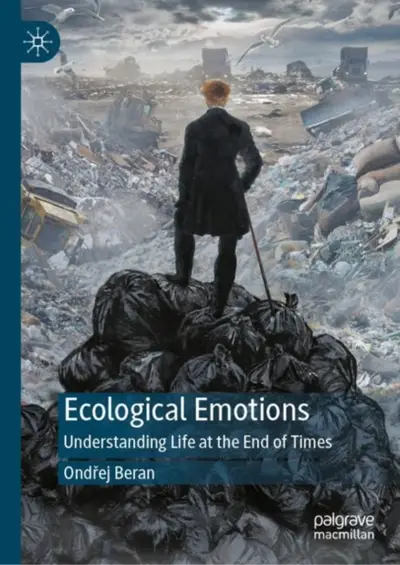
In this book, Ondrej Beran explores the various emotions that arise in response to the perceived and observed climate crisis. He provides a focused philosophical overview of ecological emotions (mostly negative ones, such as grief) and reflects on some of their characteristics. He also addresses the nature of their interconnection, and their status as potentially lucid and justified recognitions of a compromised value. In general, Beran’s interest is in thinking of these emotions as peculiar forms of understanding, and in exploring what these forms of understanding show us about living in a world that we see as seriously damaged or under serious risk. He argues that these forms of understanding are cultivated and expressed in various ways and can take very diverse, even idiosyncratic shapes. Ultimately, he highlights the important role played by the reflective distance in many of our emotional responses to the climate crisis, as they also incorporate and shape how we understand our individual lives. Special attention is paid here to “light-heartedly pessimistic” takes on one life, in relation to the climate crisis, and to a critical reflection of the problematic aspects of this reflection, especially its enabling conditions (which would represent natural openings for further discussions, whether post-colonial, Marxist, feminist, or general political critiques).The book is, methodologically, seated primarily in the tradition of post-Wittgensteinian philosophy (ethics), building upon previous theoretical work on examples in philosophy. But it relies on other resources as well: cognitivist approaches to emotion (Solomon, Nussbaum, Rorty), existential phenomenology (Ratcliffe), or Adornoian dialectics.
Bibliographic data © Gardners Books Ltd.