PDF · English
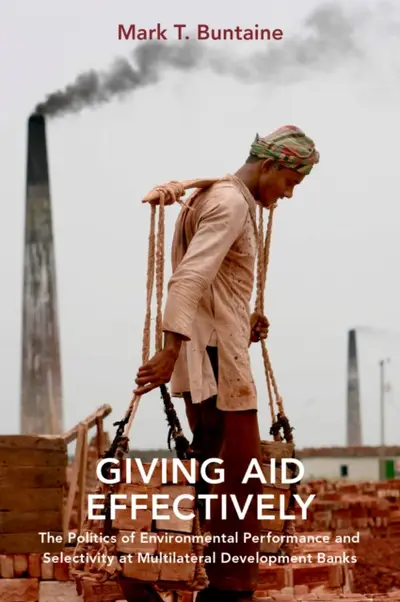
Giving Aid Effectively
The Politics of Environmental Performance and Selectivity at Multilateral Development Banks
Price and availability
$28.99
Available in: Andorra, Austria, Australia, Belgium, Bulgaria, Canada, Switzerland, Cyprus, Czechia, Germany, Denmark, Estonia, Spain, Finland, France, United Kingdom, Guernsey, Greece, Croatia, Hungary, Ireland, Isle of Man, Iceland, Italy, Jersey, Japan, Liechtenstein, Lithuania, Luxembourg, Latvia, Monaco, Malta, Netherlands, Norway, Poland, Portugal, Romania, Sweden, Slovenia, Slovakia, San Marino, United States, Vatican City, South Africa
Stores: US, UK, Canada, EU, Australia.
Sign in to buyThe price is re-checked by the server before payment.
For personal use under the eBook licence.
- Format
- DRM
- Not stated by the publisher
- Language
- English
- Publisher
- Oxford University Press
- Published
- 1 March 2016
- ISBN
- 9780190467463
- Subjects
- Aid & relief programmes, International relations, International institutions, Development economics & emerging economies, Environmental policy & protocols, Aid and relief programmes, International relations, International institutions / intergovernmental organizations, Development economics and emerging economies, Environmental policy and protocols
About this book
International organizations do not always live up to the expectations and mandates of their member countries. One of the best examples of this gap is the environmental performance of multilateral development banks, which are tasked with allocating and managing approximately half of all development assistance worldwide. In the 1980s and 1990s, the multilateral development banks came under severe criticism for financing projects that caused extensive deforestation, polluted large urban areas, displaced millions of people, and destroyed valuable natural resources. In response to significant and public failures, member countries established or strengthened administrative procedures, citizen complaint mechanisms, project evaluation, and strategic planning processes. All of these reforms intended to close the gap between the mandates and performance of the multilateral development banks by shaping the way projects are approved. Giving Aid Effectively provides a systematic examination of whether these efforts have succeeded in aligning allocation decisions with performance. Mark T. Buntaine argues that the most important way to give aid effectively is selectivity - moving towards projects with a record of success and away from projects with a record of failure for individual recipient countries. This book shows that under certain circumstances, the control mechanisms established to close the gap between mandate and performance have achieved selectivity. Member countries prompt the multilateral development banks to give aid more effectively when they generate information about the outcomes of past operations and use that information to make less successful projects harder to approve or more successful projects easier to approve. This argument is substantiated with the most extensive analysis of evaluations across four multilateral development banks ever completed, together with in-depth case studies and dozens of interviews. More generally, Giving Aid Effectively demonstrates that member countries have a number of mechanisms that allow them to manage international organizations for results.
Bibliographic data © Gardners Books Ltd.