PDF · English
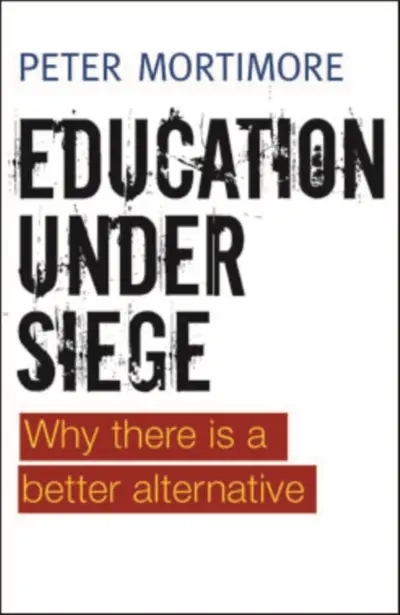
Education under Siege
Why there Is a Better Alternative
Price and availability
Price unavailable
Available in: Andorra, Austria, Australia, Belgium, Bulgaria, Canada, Switzerland, Cyprus, Czechia, Germany, Denmark, Estonia, Spain, Finland, France, United Kingdom, Guernsey, Greece, Croatia, Hungary, Ireland, Isle of Man, Iceland, Italy, Jersey, Japan, Liechtenstein, Lithuania, Luxembourg, Latvia, Monaco, Malta, Netherlands, Norway, Poland, Portugal, Romania, Sweden, Slovenia, Slovakia, San Marino, United States, Vatican City, South Africa
Stores: US, UK, Canada, EU, Australia.
This title cannot be bought in this store yet: its supplier terms, territorial rights or price are still being confirmed.
For personal use under the eBook licence.
- Format
- DRM
- Not stated by the publisher
- Language
- English
- Publisher
- Policy Press
- Published
- 23 September 2013
- Pages
- 328
- ISBN
- 9781447311331
- Subjects
- Education, Moral & social purpose of education, Educational strategies & policy, Schools, Education / Educational sciences / Pedagogy, Moral and social purpose of education, Educational strategies and policy
About this book
At a time when education is considered crucial to a country's economic success, recent UK governments have insisted their reforms are the only way to make England's system world class. Yet pupils are tested rather than educated, teachers bullied rather than trusted and parents cast as winners or losers in a gamble for school places. Education under siege considers the English education system as it is and as it might be. In a highly accessible style, Peter Mortimore, an author with wide experience of the education sector, both in the UK and abroad, identifies the current system's strengths and weaknesses. He concludes that England has some of the best teachers in the world but one of the most muddled systems. Challenging the government's view that there is no alternative, he proposes radical changes to help all schools become good schools. They include a system of schools receiving a fair balance of pupils who learn easily and those who do not, ensuring a more even spread of effective teachers, as well as banning league tables, outlawing selection, opening up faith schools and integrating private schools into the state system. In the final chapter, he asks readers who share his concerns to demand that the politicians alter course. The book will appeal to parents, education students and teachers, as well as everyone interested in the future education of our children.
Bibliographic data © Gardners Books Ltd.