PDF · English
Fairground Theory
The Hidden Life and Architecture of the Travelling Fair
Price and availability
$103.99
Available in: Andorra, Austria, Australia, Belgium, Bulgaria, Canada, Switzerland, Cyprus, Czechia, Germany, Denmark, Estonia, Spain, Finland, France, United Kingdom, Guernsey, Greece, Croatia, Hungary, Ireland, Isle of Man, Iceland, Italy, Jersey, Japan, Liechtenstein, Lithuania, Luxembourg, Latvia, Monaco, Malta, Netherlands, Norway, Poland, Portugal, Romania, Sweden, Slovenia, Slovakia, San Marino, United States, Vatican City, South Africa
Stores: US, UK, Canada, EU, Australia.
Sign in to buyThe price is re-checked by the server before payment.
For personal use under the eBook licence.
- Format
- DRM
- Not stated by the publisher
- Language
- English
- Publisher
- Bloomsbury Publishing
- Published
- 11 December 2025
- Pages
- 256
- ISBN
- 9781350524712
- Subjects
- Theory of architecture, History of architecture, Sociology: sport & leisure, Theory of architecture, History of architecture, Sociology: sport and leisure
About this book
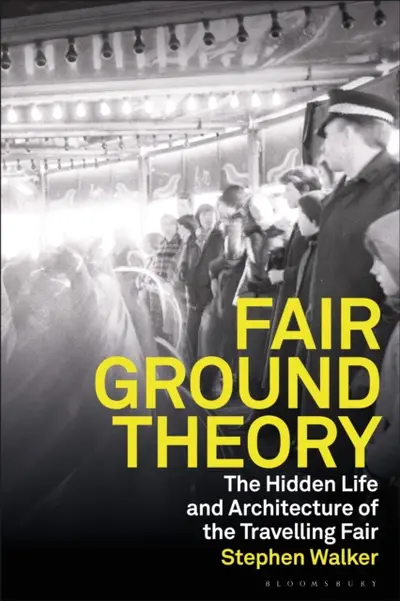
Fairground Theory goes behind the scenes of the travelling fair exploring its design, its atmosphere, and the people and processes that make it happen in order to develop the first architectural theory of the fair. Even well-known places can be made strange when the fair arrives in town. As visitors to the fair, we are willingly overtaken by the all-round intensity of the environment: loud, fast, bright, busy, and disorientating. Yet the design of the fairground site and its rides seemingly so anarchic and chaotic involves extensive considerations which are usually invisible to visitors. This book reveals these considerations, uncovering the relational architecture of events, bodies, networks, and machines which has long constituted the hidden life of the fairground. Combining extensive fieldwork and archival study of travelling fairs in the UK, the study also connects to other examples from around the world temporary, ephemeral, and permanent architectures from World Expos and pleasure gardens to amusement parks and parades. Deploying event theory, process philosophy, and the work of thinkers including Whitehead, Simondon, and Stengers, Fairground Theory situates fairs both historic and contemporary within a sustained theoretical exchange with architectural, urban, social and cultural theory.
Bibliographic data © Gardners Books Ltd.